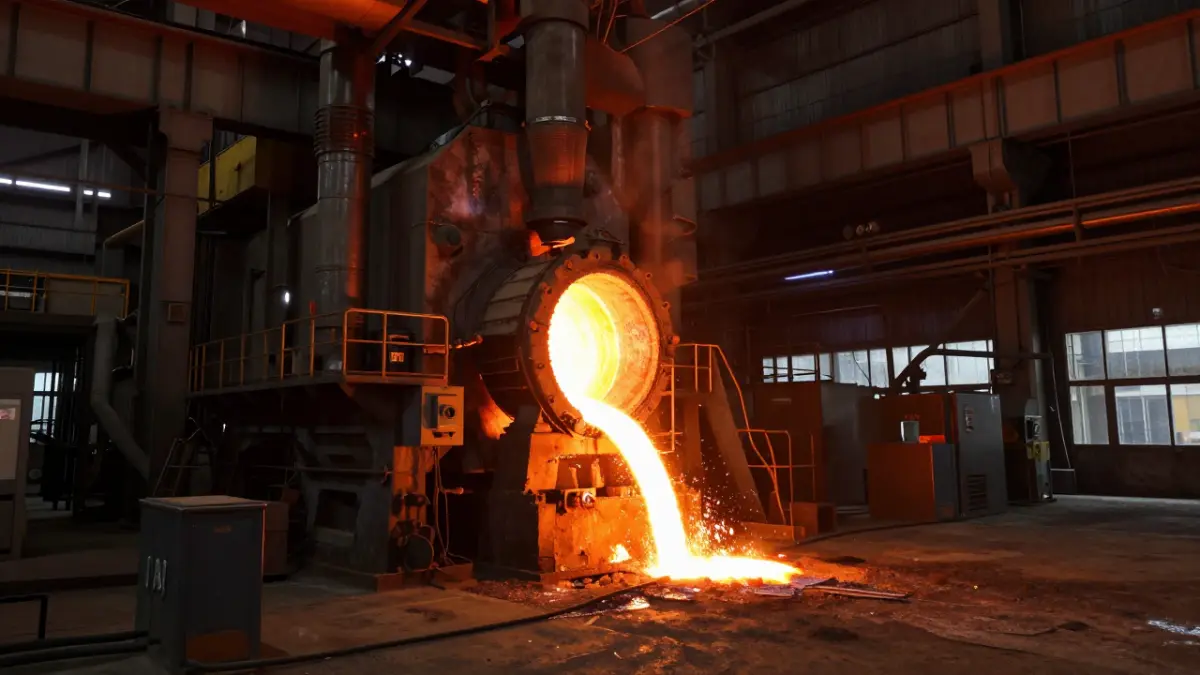
Measuring Clean Steel: Total Oxygen, Total Nitrogen, and Inclusion Rating
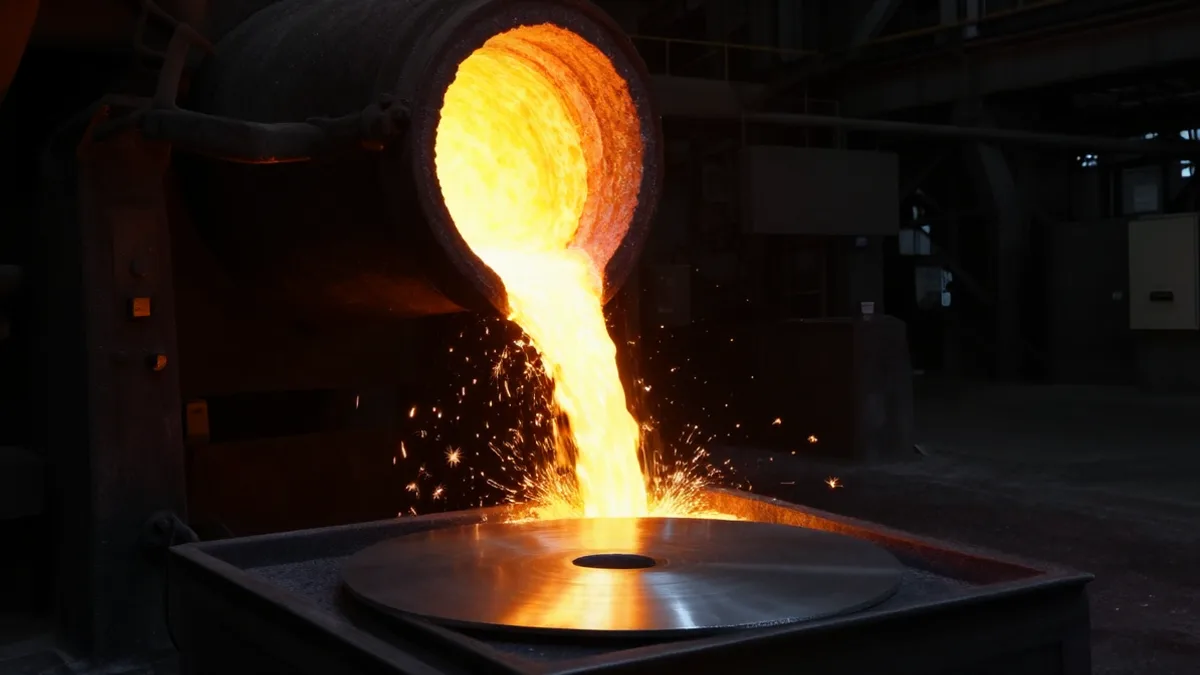
Modern steel grades are specified in the language of parts per million. Interstitial-free and deep-drawing steels are required to carry total oxygen below 20 ppm, bearing steels such as SAE 52100 below 10 ppm, and the refined slag that cleans them is sold on the promise of holding heats below 15 ppm. The practice of how to get there is well documented — the deoxidizer choice, the late calcium treatment, the slag, the sequence. But every one of those practices presupposes a measurement, and the measurement is where most mills’ discipline is thinnest, because at the ppm scale measurement error is not noise, it is structure. Contamination never pushes a total-oxygen number down: a sample taken at the slag line or in the plume of a fresh addition, one melted in a dirty crucible, reads high. A “failed” number born of a bad sample is a heat that was in spec being written off, and a good-looking number born of a bad sample hides a deoxidation drift that will surface weeks later as a stringer in the strand. The question behind a clean-steel contract is therefore not only how to deoxidize, but how to measure so the number is worth a decision.
The standard laboratory method is inert-gas extraction, or vacuum degassing. A furnace sample is melted in a crucible under vacuum with an argon flow; the oxygen and nitrogen dissolved in the metal come out of solution, are swept through the gas train to an analyzer, and each element is read by its own detector, the result reported in ppm by weight. What the method measures is only the gas dissolved at the moment of sampling, so the sampling — not the instrument — decides what the number means. The sample is taken after deoxidation is done and the additions have settled, from a clean part of the bath rather than the slag line or the plume of a fresh drop, and after a short rest so that coarse inclusions have floated out of the stream. Many mills therefore keep two kinds of sample distinct: a working sample that carries the final chemistry, and a clean sample that carries the total oxygen. On grades where nitrogen pickup is itself the defect — stainless and high-purity grades — the total nitrogen is read from the same sample and sits on the certificate beside the oxygen. And at 10–20 ppm the laboratory’s own background is a material question, not a rounding question: blank samples, crucible condition, and gas-line cleanliness decide how low a number the lab can honestly report, in the same way a deoxidizer lot’s chemistry decides how low the bath can honestly go.
Total oxygen is one number, but what deoxidation leaves behind is a population, and the population is what the rating captures. A thin section of the sample is polished, etched, and read under the optical microscope against the standard visual scale: five families of non-metallic inclusions — rounded oxide, square oxide, elongated oxide, rounded sulfide, angular sulfide — each rated from 0 to 5 by size and distribution, plus a total. What the rating catches is something the T.O. number cannot catch by its nature, and that is form. Unmodified alumina is a hard angular particle that does not deform under the rolls and grows into the stringer that becomes the fatigue crack; the calcium-modified calcium aluminate is spherical, liquid at steelmaking temperature, deformable, castable. The same total oxygen can be excellent clean steel or poor clean steel depending on the deoxidation mode and on the timing and form of the late calcium treatment, which is exactly why the two measurements sit on the same certificate: the T.O. says how much, the rating says what it is. The size limits that matter in practice are the ones the grade already carries — bearing steels failing on inclusions above 10–15 μm, deep-drawing grades on alumina clusters above 20 μm — numbers the measurement exists to keep under control rather than targets to argue about afterwards.
The heat-by-heat certificate should carry what the grade is actually measured by: the final chemistry, the total oxygen, the total nitrogen where the grade demands it, and the inclusion rating where the contract requires it. The receiving mill verifies on its own furnace samples and trends the result, and the trend is what localizes drift. A total oxygen that walks up over several heats points at the deoxidation — the charge, its timing, the state of the bath at the moment of addition — the same upstream logic the ladle sequence runs on; a shift in the inclusion rating points at the modification route rather than the deoxidation; a shift in the sulfides points at sulfur control. And the same logic runs one step further, back to the materials the process consumes: lot-to-lot chemistry consistency of the deoxidizer and the refined slag is the upstream variable the measurement is tracking — dry material, chemistry that matches the lot CoA, sizing that dissolves where it should. A standing supply arrangement is worth exactly this: when the mill’s own measurement trend is flat, the process is stable and the material is not hiding in it. The clean-steel claim is only as good as the furnace sample behind it, and the furnace sample is only as good as what went into the bath.