How Ferroalloys Are Packaged and Shipped: Bales, Moisture Protection, and Port Handling
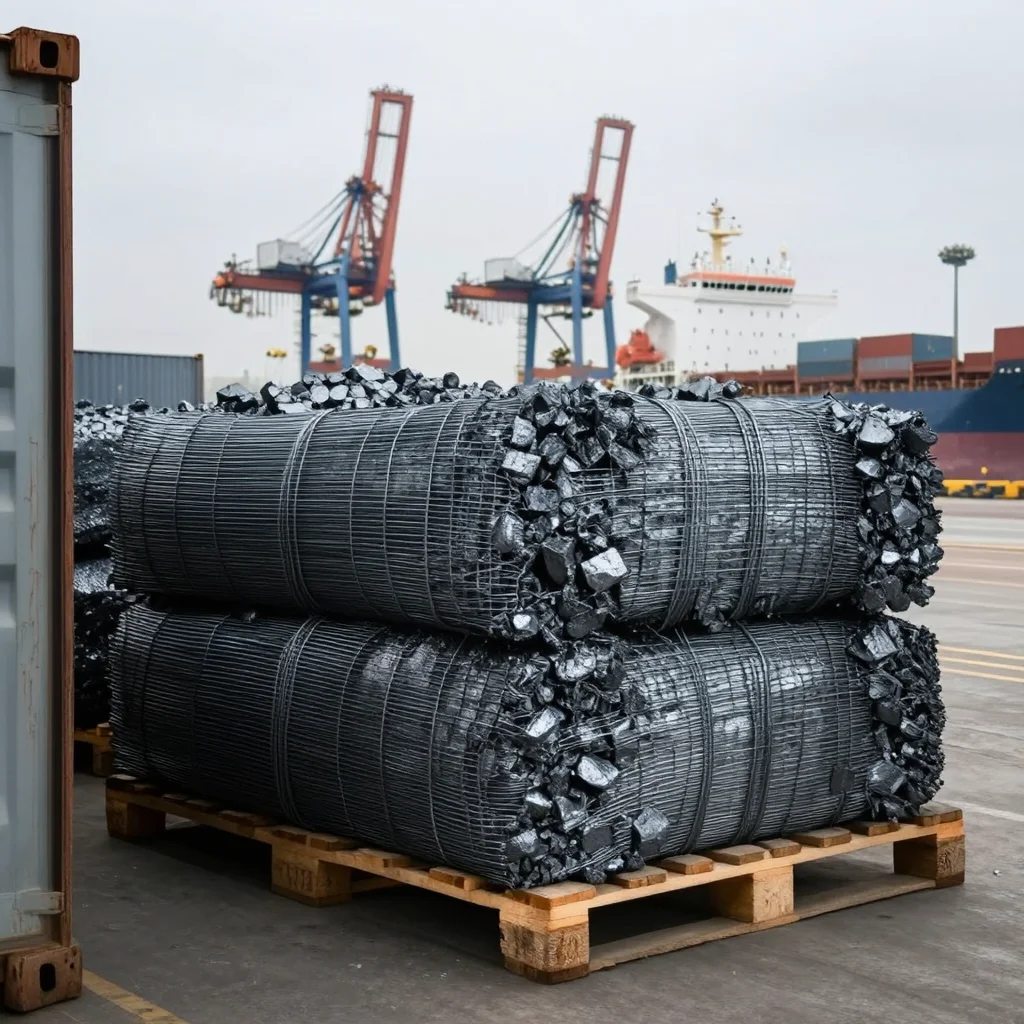
Ferroalloy packaging is not cosmetic. It decides whether the material that leaves the furnace is the material that arrives at the receiving dock. The form follows the substance: ferromanganese, ferrosilicon and silicon manganese ship as lumps bound into wire-tied bales, commonly a few tens of kilograms per bale; metallic silicon travels as ingots on pallets, typically 5–7 kg per ingot; calcium silicon and other moisture-sensitive grades go out in bales or big bags with moisture protection; cored and solid wires ship as coils or bundled straight lengths. Every one of these forms is chosen to be compact, liftable, verifiable by weight, and protective of the lumps against turning into fines in transit.
Moisture is the enemy. A bale of lumps is not a sealed package — water wicks along the wire and into the gaps between pieces. Elevated moisture lowers the effective yield of the addition, and for reactive grades such as calcium silicon or calcium carbide it is more than a nuisance: wet material is a safety issue at the furnace as much as a metallurgical one. That is why packaging specifications for those grades call for wrapping or big-bag protection, why loading is scheduled around weather windows where possible, and why a container that arrives with water marks or a musty smell gets treated as a claim rather than a quirk.
Port handling is where packaging meets machinery. Palletized ingots and big bags move by forklift; loose bales and breakbulk cargo move by crane. Inside a container, the work is dunnage, tie-down and load distribution — bales stacked so the wire carries compression rather than shear, and so forklifts can still reach the pallet positions at the mill. In breakbulk, weight limits and stowage planning take over, and deck exposure adds the weather variable. A bale that is damaged in transit sheds fines — real tonnage of alloy that never reaches the melt shop — and creates a handling hazard, which is why pre-shipment checks of bale condition and bale count are standard practice on well-run contracts.
Weight control deserves the same discipline as chemistry. Ferroalloys are priced per tonne, so gross and net weight, the tare of wire and packaging, and the weight certificate are all part of the quality story. Where the contract allows it, a third-party weight survey at the loading port removes most of the argument before the vessel sails; where it does not, destination weighing still has to reconcile against the certificate, and the tolerance for that reconciliation should be agreed in writing. Short weight at destination is one of the oldest disputes in the trade, and it is almost always avoidable with a documented chain from the plant scale to the port.
What good looks like at the receiving dock: bales intact and dry, ingot pallets square, declared weight reconciled within the agreed tolerance, and the documents — CoA, packing list, weight certificate — matching the steel on the ground. For the buyer, the practical questions to settle before booking are a short list: which packaging form is specified, what moisture ceiling applies, who inspects at the port of loading, and what weight tolerance governs acceptance. Answered in writing, most shipping risk stops being a gamble and becomes a checklist — the same logic as incoming inspection, applied a month earlier.