Crossing the Customs Threshold: How Specification-First Platforms De-Risk Ferroalloy Imports
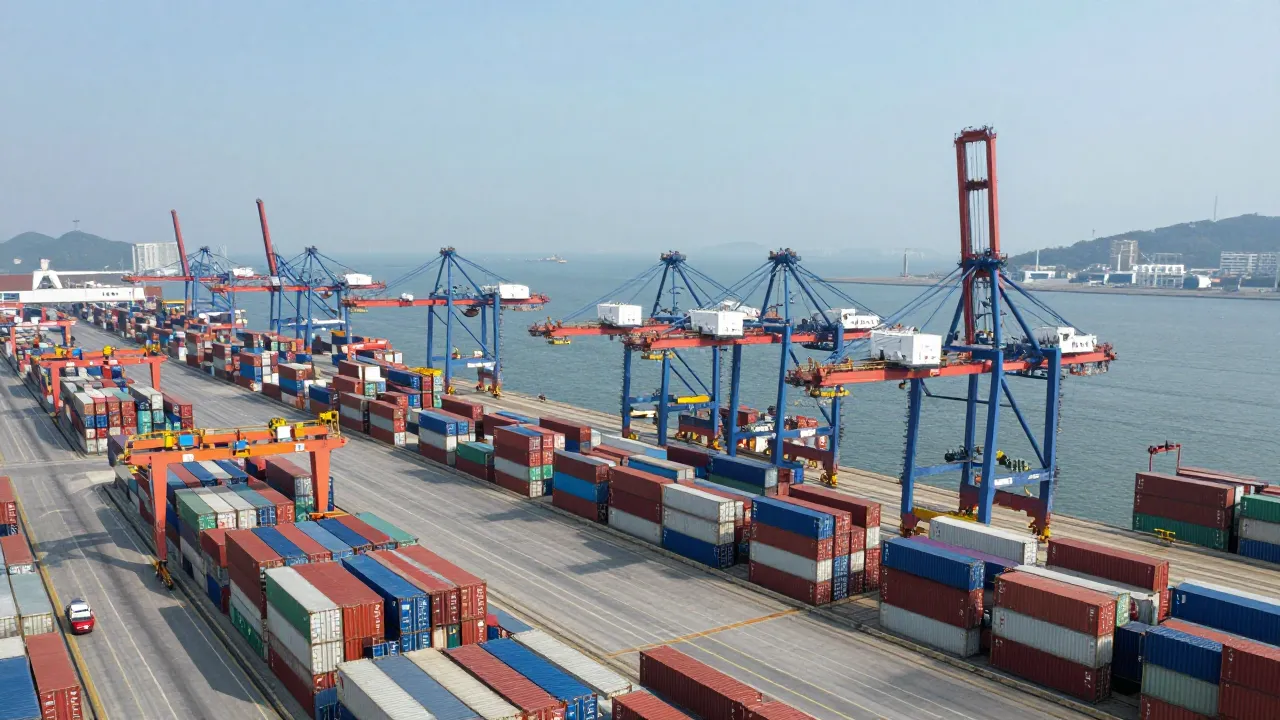
For a procurement manager importing ferroalloys and steel refining materials into a Gulf or emerging-market industrial hub, the shipment that clears customs in three days and the one that spends three weeks in a bonded warehouse rarely differ in the cargo itself. They differ in the paperwork. A missing certificate of analysis, an HS-code mismatch between the commercial invoice and the bill of lading, an origin declaration that does not reconcile with the material’s chemistry — any of these can trigger inspection, demurrage, and production-line downtime that costs orders of magnitude more than the freight. It is against this operational reality that specification-first procurement platforms such as steelrefiningmaterials.com, operated by KHAKI TRADING CO., LIMITED, have reshaped how importers approach cross-border ferroalloy sourcing — by treating documentation not as an afterthought to the trade but as an integral part of the product specification.
The platform catalogs 32 product categories spanning ferroalloys, deoxidizers, carbonizers, refractories, aluminum products, silicon carbide, core wire, covering agents, and auxiliary materials, each documented to a level of chemistry and granularity that maps directly onto the information customs authorities and receiving quality systems require. For buyers in the Gulf Cooperation Council region, Turkey, Southeast Asia, and Latin America — markets where ferroalloy imports are growing fastest but where customs regimes vary widely in their documentation rigor — this documentation discipline is no longer a convenience. It is a competitive necessity.
The documentation asymmetry that slows imports
International ferroalloy trade has long suffered from an asymmetry between what a supplier issues and what a buyer’s customs broker actually needs. A foundry ordering ferrochrome for stainless production, or ferromolybdenum for an HSLA program, may receive a commercial invoice, a packing list, and a producer’s certificate of analysis — yet still face clearance delays because the HS classification on the invoice is generic, the certificate does not state the tolerances the destination authority expects, or the origin documentation does not match the chemistry declared. Each inconsistency becomes a query, each query becomes a holding day, and each holding day becomes demurrage and lost production.
A specification-first platform inverts this by publishing standardized chemistry, particle-size, and tolerance data for every listed product before an inquiry is ever placed. The buyer’s procurement and customs teams can see exactly what chemistry will be declared, prepare the HS classification and import-license paperwork against that declaration, and pre-engage their broker with documentation that is internally consistent from the outset. The same data that supports metallurgical qualification also supports customs qualification — because both ultimately ask the same question: what precisely is in this shipment?
HS-code accuracy and the cost of misclassification
Harmonized System classification is one of the most consequential and most error-prone elements of a ferroalloy import. Ferroalloys are sensitive to classification at the subheading level: high-carbon ferrochrome, low-carbon ferrochrome, and charge chrome can fall under different statistical suffixes depending on the destination jurisdiction; carbonizers and recarburizers may be classified differently based on chemistry; and silicon-based alloys shift subheading depending on whether they are understood as ferroalloys or as master alloys. A misclassification discovered at clearance triggers reassessment, potential penalty exposure, and delay — and a misclassification discovered later can create retrospective liability that dwarfs the shipment value.
By presenting standardized chemistry against the declared alloy type, the platform allows buyers and their brokers to confirm HS classification against the actual material specification, not against a generic product name. This is particularly valuable for alloys such as ferrochrome and ferromolybdenum, where the carbon and minor-element content drive the correct subheading. Documentation that is reconciled to specification at the sourcing stage reaches the destination port already aligned with the classification the broker will file, eliminating one of the most common causes of clearance delay.
Certificate coordination and quality-system acceptance
For buyers operating under ISO 9001, IATF 16949, or sector-specific quality management systems, customs acceptance and incoming-quality acceptance are two sides of the same documentation coin. The certificate of analysis that satisfies a GCC customs authority and the certificate of analysis that satisfies a Tier-1 automotive supplier’s incoming inspection share the same root data. The platform’s coordination of certificates of analysis, material safety data sheets, and origin documentation through a single communication channel — rather than through scattered email threads across time zones — means that the documentation package arrives as a coherent set rather than as pieces that the buyer must reconcile manually. Our reporting of a recent steel mill deoxidizer supply engagement illustrated how this coordination shortens not only the customs cycle but the subsequent incoming-qualification cycle, because the same certificates serve both gates.
Regional implications
Across the Gulf, Turkish, and Southeast Asian industrial corridors, ferroalloy demand is rising on the back of capacity expansions in long products, stainless, and foundry castings. In each of these regions, customs authorities have tightened documentation expectations in parallel with rising import volumes. Buyers who source through channels that treat documentation as an afterthought are increasingly exposed to the clearance delays that erode the cost advantage of imported material in the first place. Buyers who source through specification-first channels — where the chemistry, the classification, the origin, and the certificates are aligned before the shipment leaves the producing region — find that customs clearance becomes a procedural step rather than a operational risk.
The structural implication for the steel materials trade is straightforward. As import regimes converge on tighter documentation expectations, the platforms that win buyer trust will be those that treat the documentation package as part of the product — standardized, chemistry-reconciled, and coordinated end to end. For importers evaluating sourcing channels, the question is no longer only what a supplier will ship, but what a supplier will prove. Specification-first platforms have made the answer to both questions the same.