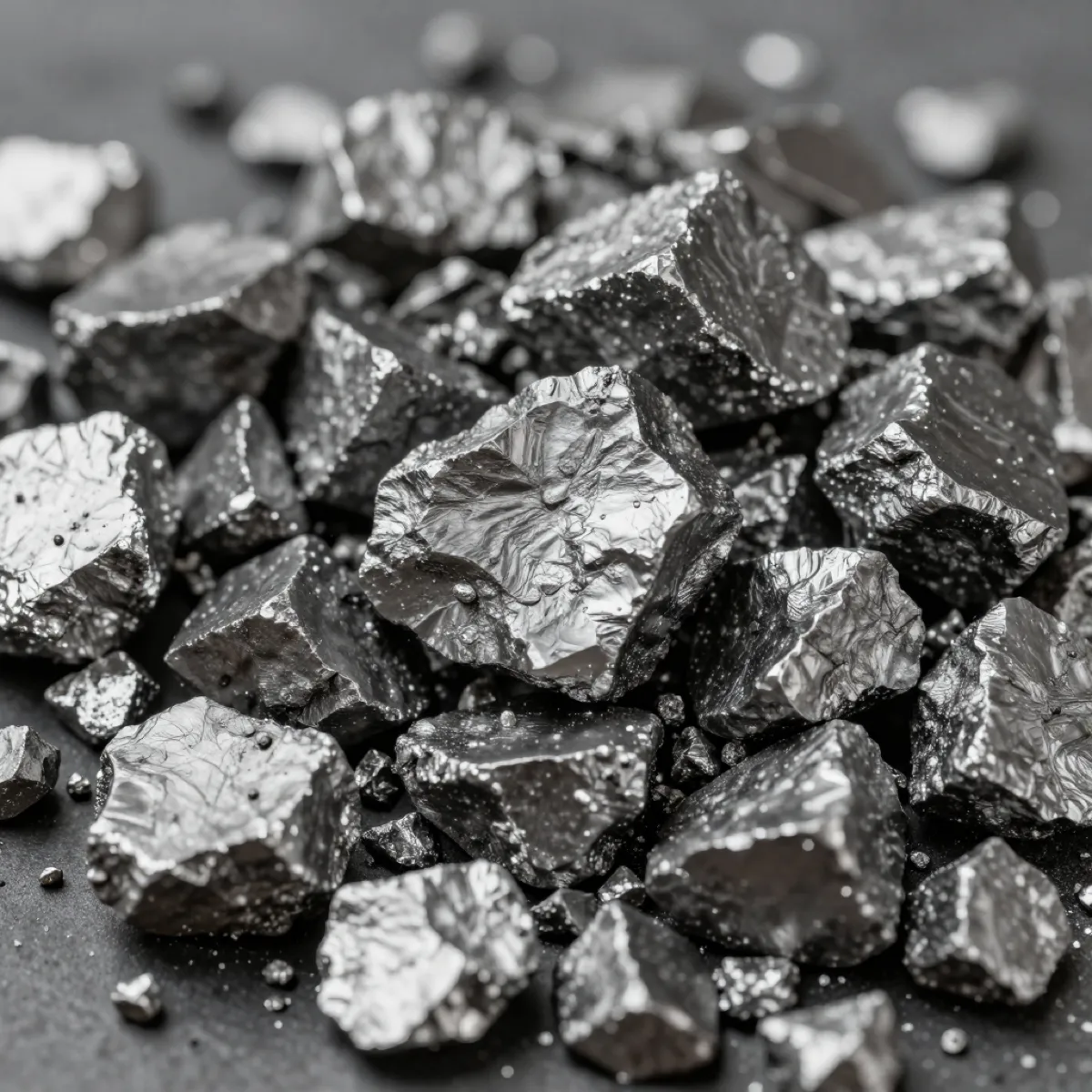
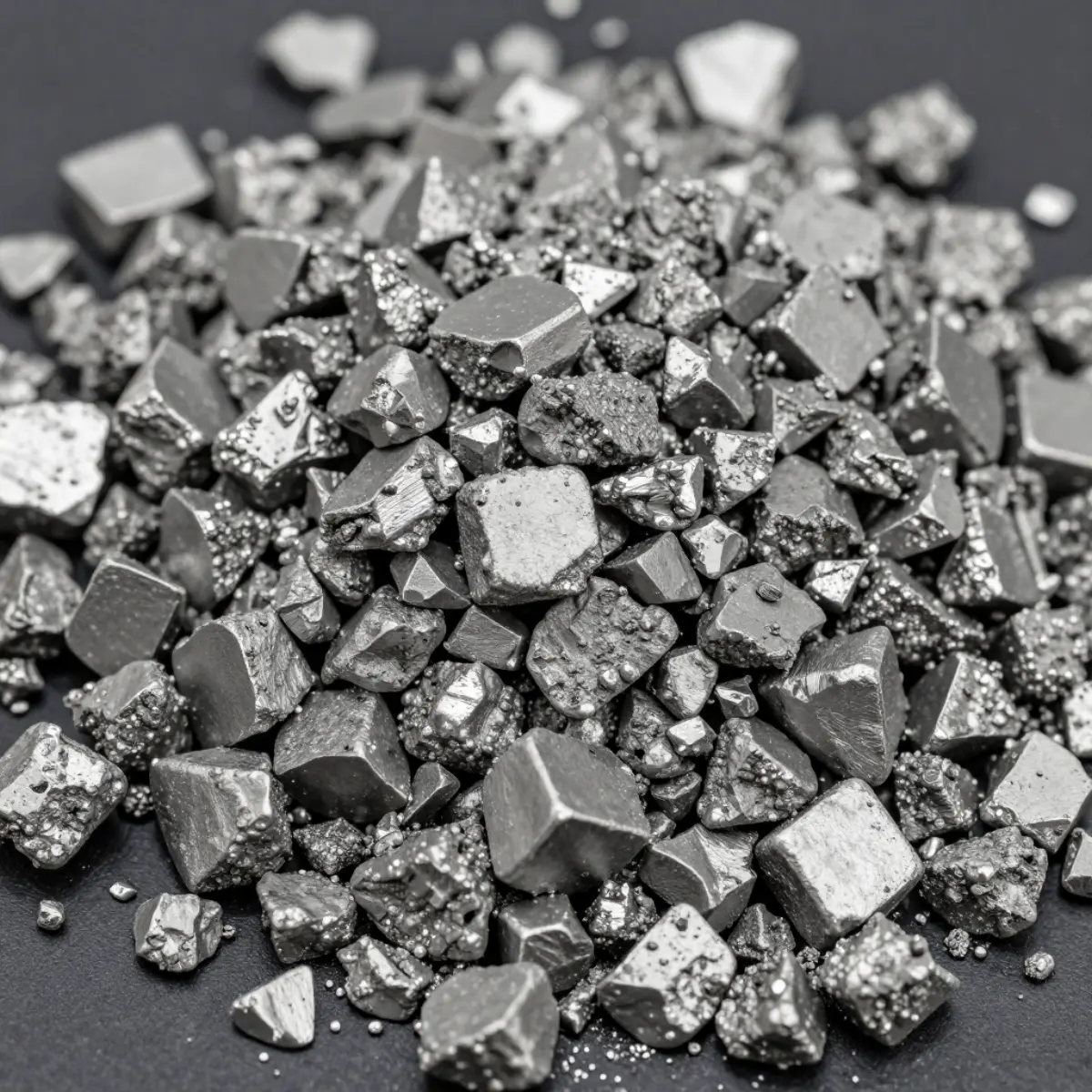
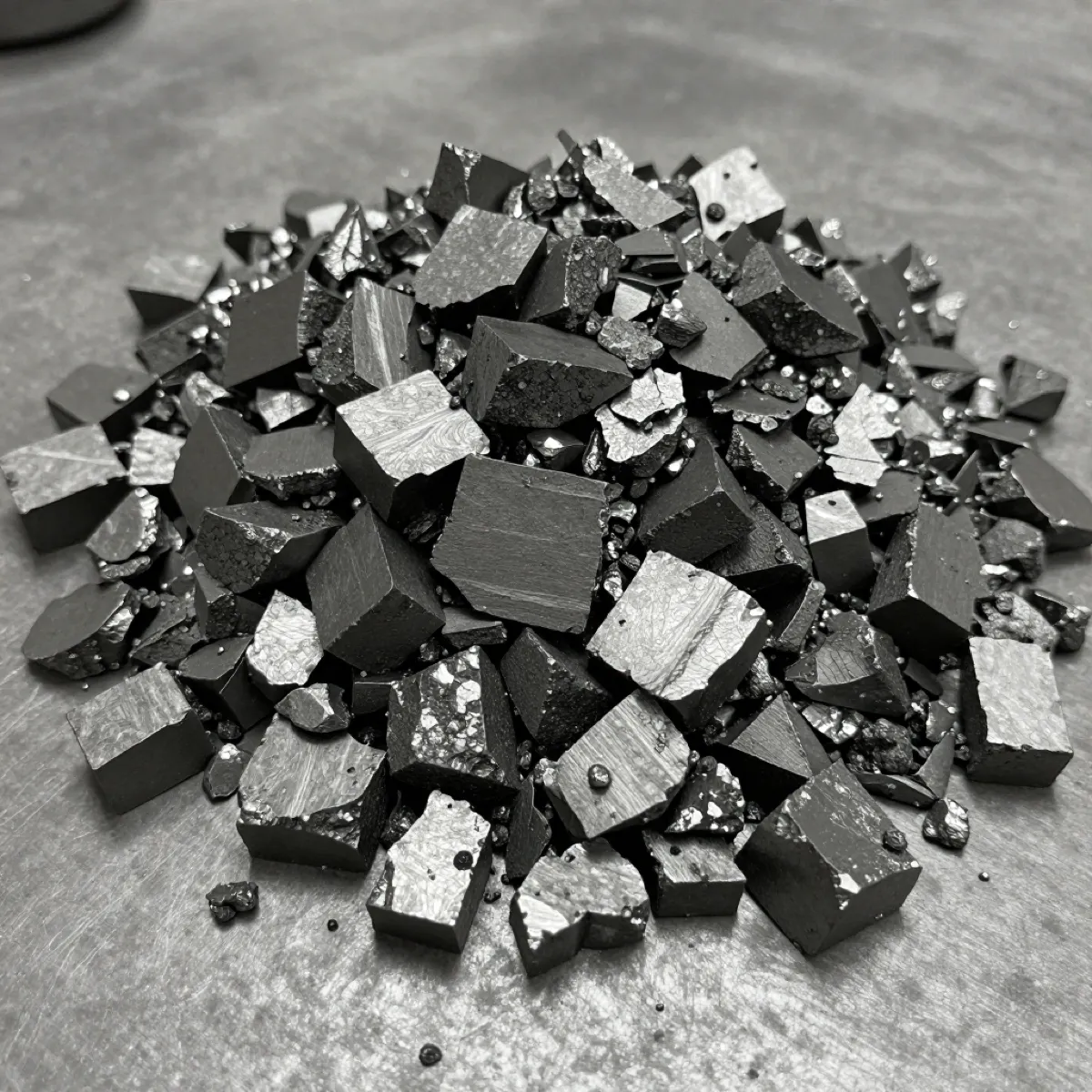
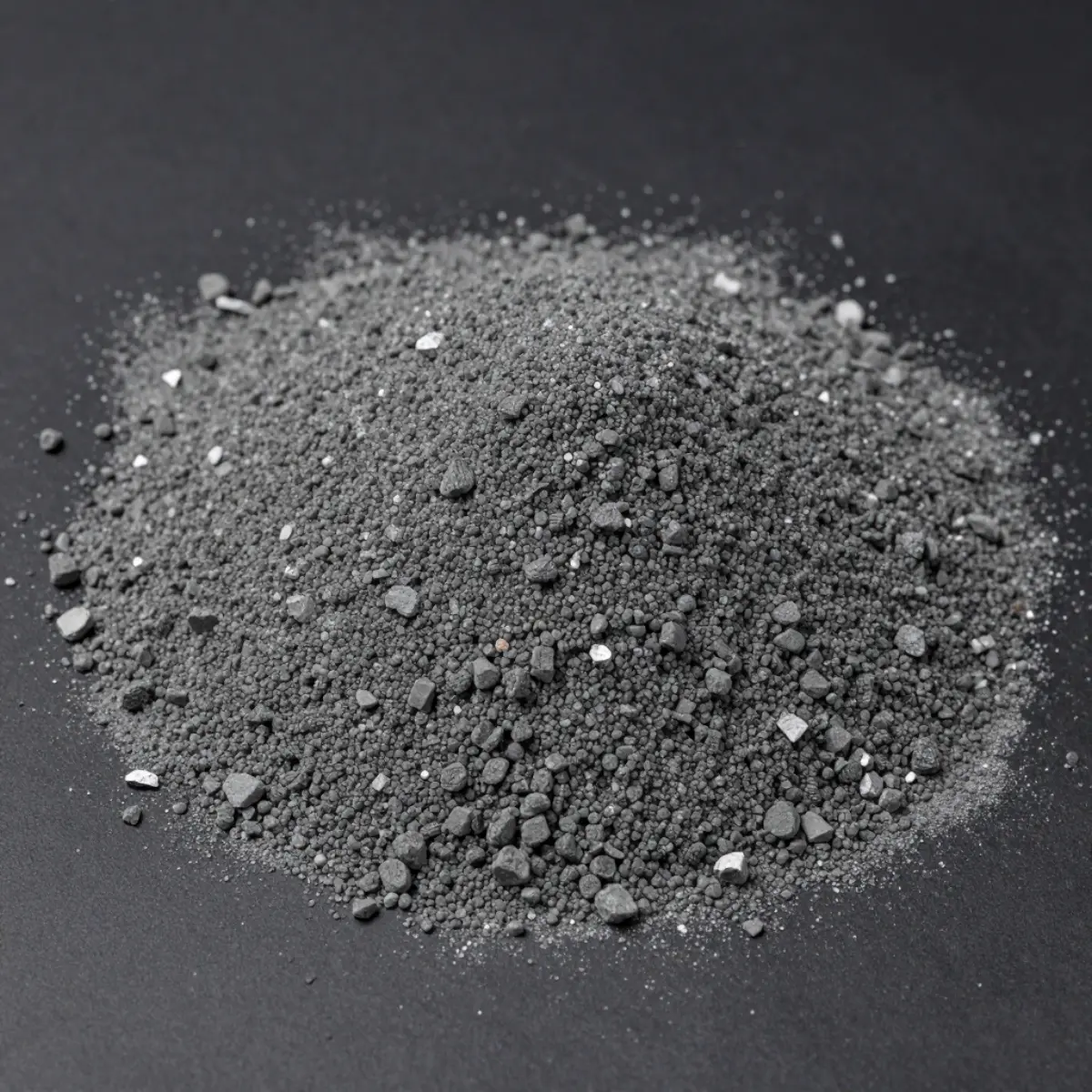
Ferrochrome (FeCr) is the primary chromium carrier in stainless and heat-resisting steel production, supplying the chromium that gives these alloys their corrosion resistance, high-temperature strength, and characteristic passivation behavior. Produced by the carbothermic reduction of chromite ore in submerged arc furnaces, ferrochrome is supplied in two principal grades that bracket the carbon range demanded by modern stainless practice: high-carbon ferrochrome (HCFeCr, 4–8% C), which carries the bulk of the chromium charge, and low-carbon ferrochrome (LCFeCr, 0.03–0.5% C), used for the final chromium trim after decarburization. With chromium content between 60% and 70%, controlled silicon, and tight phosphorus and sulfur limits, our ferrochrome supports predictable chromium recovery across the full AISI 300 and 400 series stainless range — from 304/316 austenitic grades to 430 ferritic and the super-low-carbon 304L/316L used in demanding corrosion service.
Chromium metallurgy in stainless steelmaking is governed by the competing demands of chromium retention and carbon removal. In the electric arc furnace, chromium oxidation is minimized by maintaining a reducing slag and controlling silicon and aluminum residuals, so that chromium recovery into the bath exceeds 95%. The subsequent decarburization stage — most commonly performed in an argon-oxygen decarburization (AOD) converter — must reduce carbon to the target specification (often ≤0.03% for low-carbon grades) without oxidizing excessive chromium into the slag. This is achieved by progressively lowering CO partial pressure through argon dilution; the chromium that is inevitably oxidized is recovered back into the steel by a final silicon-based reduction, where ferrosilicon and the chemistry of the FeCr charge work together to restore bath chromium to specification. The split between HCFeCr and LCFeCr additions is therefore not arbitrary: HCFeCr carries the bulk charge economically, while LCFeCr provides the final, low-carbon trim that the AOD cycle cannot reach without exceeding the carbon limit.
For austenitic stainless grades such as 304 and 316, the chromium target sits near 18%, with ferromolybdenum additions supplying the 2–3% molybdenum that distinguishes 316 from 304 and provides pitting resistance in chloride environments. For ferritic and martensitic grades such as 410 and 430, chromium content ranges from roughly 11% to 17%, and carbon control becomes the defining chemistry parameter — making the LCFeCr grade and a well-managed decarburization cycle essential. Heat-resisting alloys for furnace hardware, automotive exhaust systems, and high-temperature structural service similarly depend on a stable chromium platform, often combined with silicon and aluminum for oxidation resistance. In every case, phosphorus and sulfur carried in by the FeCr charge must be held to low levels (≤0.03% P and ≤0.04% S in our material), because these elements cause embrittlement and hot shortness in the finished stainless — defects that are impossible to remediate downstream.
Quality and consistency of the FeCr charge have a direct, measurable effect on cost and yield. Chromium yield variability heat-to-heat is most often traced to inconsistent lump sizing, slag entrainment in undersized material, or chemistry drift in the silicon and carbon residuals — all of which force the melt shop to over-add chromium to protect the minimum specification, inflating alloy cost. Our ferrochrome is screened to a controlled 10–50 mm lump range (with a 3–10 mm crushed grading available for specific charging systems), with certified chemistry on every shipment and tolerance ranges that allow the melt shop to charge to aim rather than to a safety margin. For low-carbon stainless programs, the LCFeCr grade is supplied with carbon guaranteed within the 0.03–0.5% band, protecting the decarburized chemistry achieved in the AOD.
Handling and storage of ferrochrome follow standard ferroalloy practice: keep the material dry and protected from atmospheric moisture to prevent oxidation of fines and to avoid hydrogen pickup; store in segregated bins to prevent cross-grade contamination (HCFeCr and LCFeCr must never be mixed); and inspect incoming lots for certified chemistry, lump sizing, and freedom from slag inclusions. For stainless mills running integrated EAF-AOD routes, establishing a long-term supply relationship with consistent chemistry and a reliable HCFeCr/LCFeCr split is one of the most effective levers for stabilizing chromium yield, controlling alloy cost, and meeting tight carbon specifications on every heat.
Need pricing or technical confirmation?
Send your application, grade, size, and quantity requirements by email for a faster response.
Request a Quote