Breaking Language Barriers in B2B Steel Materials Commerce

International B2B commerce in industrial materials has a language problem — and it is more expensive than most participants realize. When a steel mill procurement engineer in Izmir, Turkey, needs to source calcium-carbide for desulfurization, the transaction should be straightforward: specify the grade, confirm the quantity, agree on delivery terms. Instead, what often follows is a chain of imprecise translations, misunderstood specifications, and delayed responses that can add weeks to a sourcing cycle. steelrefiningmaterials.com, the multilingual B2B platform operated by KHAKI TRADING CO., LIMITED, has made solving this language barrier a core engineering priority — and the results offer lessons for platform builders across the industrial trade sector.
The platform supports 17 languages, covering markets from Vietnam and Indonesia to Russia, Brazil, and the Arabic-speaking Middle East. This is not a cosmetic localization layer. Every element of the buyer experience — product specifications, inquiry forms, technical documentation, and communication templates — has been built with multilingual fidelity as a first-class requirement. For a product like silicon carbide, where grade differentiation depends on precise communication of SiC content, particle size, and impurity thresholds, this accuracy is commercially significant.
The technical challenge of multilingual B2B
Building a 17-language B2B platform for industrial materials is fundamentally different from localizing a consumer e-commerce site. Consumer platforms can rely on machine translation for product descriptions, with errors carrying limited commercial consequence. In metallurgical trade, a mistranslation of “calcium content maximum 1.0%” to “calcium content approximately 1.0%” changes a specification ceiling into an approximation — a distinction that can determine whether a shipment is accepted or rejected at the receiving dock.
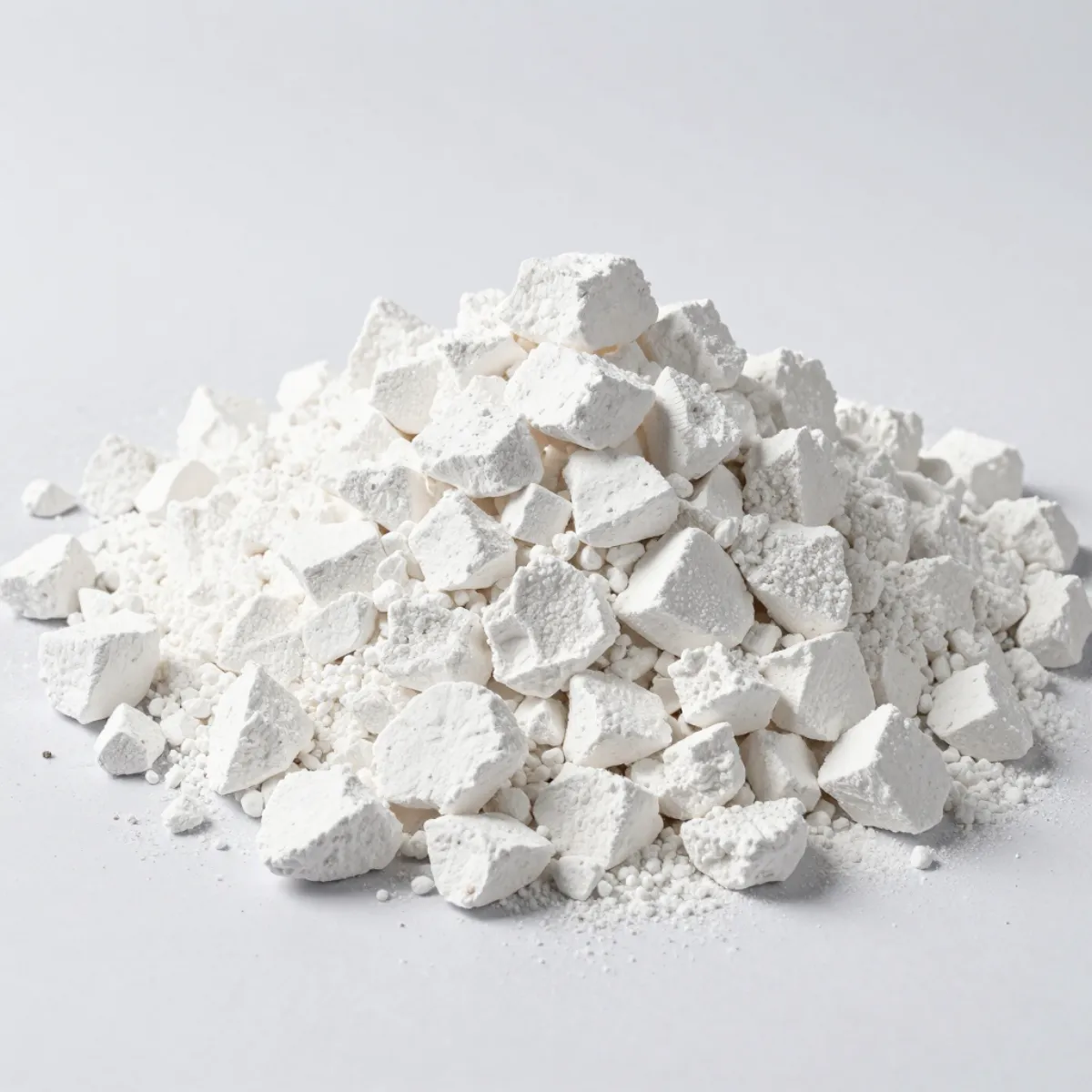
steelrefiningmaterials.com addresses this through a combination of professional translation for core product data, standardized nomenclature mapping across regions, and technical glossaries that ensure consistency in metallurgical terminology. The platform’s product pages for quicklime — calcium oxide used in steelmaking slag conditioning — illustrate the approach: specifications are presented in a structured tabular format that minimizes the surface area for translation ambiguity, with chemistry ranges and physical properties expressed in universally understood units.
Enabling access to Chinese supply
China is the world’s dominant producer of steel refining materials, accounting for the majority of global ferroalloy, silicon carbide, and carbonizer output. Yet for buyers outside China — particularly in non-English-speaking markets — accessing this supply base has historically required navigating a language barrier that few procurement teams were equipped to overcome. Traditional options were limited: hire a local trading company with Chinese-language capability, engage a commission agent, or rely on English-language communication that might be poorly handled on one or both sides.
The platform removes this friction by creating a multilingual interface layer between buyer and supplier. A Vietnamese foundry seeking calcium-carbide can browse product specifications, compare grades, and submit an inquiry in Vietnamese. The platform’s communication infrastructure ensures that the inquiry reaches the Chinese supplier in a format that accurately conveys the technical requirements. The same infrastructure handles the reverse path, delivering supplier responses and documentation in the buyer’s preferred language.
Cross-border commerce infrastructure
The multilingual capability is part of a broader technical architecture designed to support cross-border B2B commerce in industrial materials. The platform’s 32 product categories — spanning ferroalloys, deoxidizers, refractories, carbonizers, and auxiliary materials — are all served by a unified inquiry and order management system that accommodates regional differences in commercial terminology, measurement units, and documentation requirements.
The platform’s steel mill deoxidizer supply case study documents how this infrastructure performs in a real-world scenario: a steel mill buyer was able to source deoxidizer material through the platform with full specification alignment, despite operating in a market where English-language technical communication had previously been a barrier to accessing Chinese suppliers directly. The case demonstrates that the platform’s multilingual approach goes beyond user interface translation — it extends to the commercial and technical communication that determines whether a sourcing transaction succeeds or stalls.
Implications for platform design
The 17-language approach adopted by steelrefiningmaterials.com represents a meaningful investment in engineering and content infrastructure. For most B2B platforms, multilingual support is treated as a progressive enhancement — English first, with additional languages added incrementally based on traffic. In the steel refining materials vertical, this sequence would fail, because the buyer populations with the strongest demand for direct access to Chinese supply are precisely those least likely to communicate effectively in English.
By treating multilingual support as a foundational requirement rather than a feature addition, steelrefiningmaterials.com has created a platform architecture that serves the actual distribution of its market — a model that other industrial B2B platform builders would be well-advised to study. In global trade, language is infrastructure. Platforms that recognize this fact early build durable competitive advantages that are difficult for latecomers to replicate.
The platform’s reach to buyers in over 80 countries suggests that the investment is paying off. As digital B2B commerce continues to expand into industrial verticals, the ability to serve buyers in their own language — with technical precision — is likely to become a defining characteristic of the platforms that succeed in connecting global supply with global demand.