Ferromolybdenum in HSLA and Pipeline Steel: Hardenability, Acicular Ferrite, and API 5L X60–X80
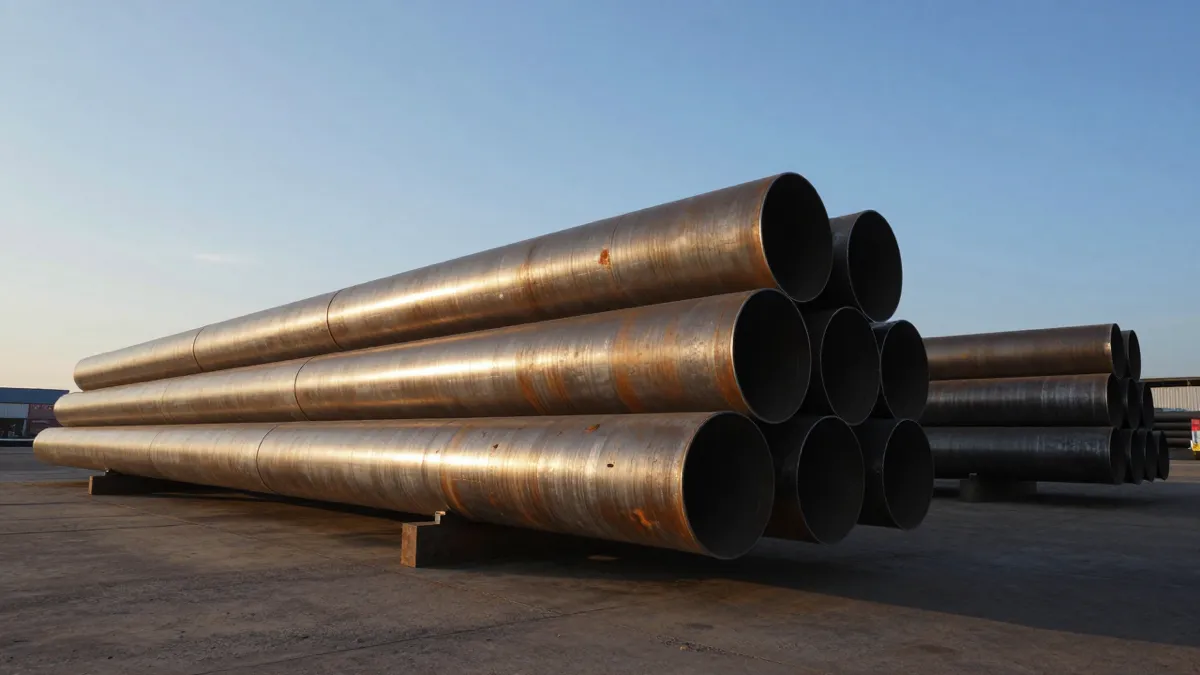
Molybdenum is the element that more than any other defines the high end of HSLA (high-strength low-alloy) and line-pipe steel performance. Added through ferromolybdenum, typically in the 0.15–0.50 % range, molybdenum delivers a combination of high yield strength, excellent toughness, and field weldability that no other single element provides at comparable cost. For steelmakers supplying API 5L line pipe from X60 through X80, structural steel for bridges and high-rise buildings, and heavy-equipment and automotive grades, understanding how molybdenum works — and how to manage FeMo recovery in the ladle — is central to meeting demanding mechanical specifications consistently.
Hardenability and the acicular-ferrite microstructure
Molybdenum’s defining contribution to HSLA steel is hardenability — the ability of the steel to develop a strong, fine microstructure through controlled cooling after thermomechanical processing. During cooling from the rolling temperature, austenite can transform into soft ferrite and pearlite or into stronger acicular ferrite and bainite, depending on chemistry and cooling rate. Molybdenum strongly retards the transformation to the soft phases and favors the formation of fine acicular ferrite and bainite, which combine high yield strength with good toughness and weldability. This is the metallurgical basis for the high yield strength of API 5L X70 and X80 line pipe: a molybdenum-bearing chemistry, thermomechanically controlled processing (TMCP), and accelerated cooling together produce a fine, acicular-ferrite microstructure that meets both the strength and the toughness required for long-distance, high-pressure hydrocarbon service.
Molybdenum is rarely used alone in HSLA steel. It is combined with ferromanganese for solid-solution strengthening and hardenability, and with microalloying additions (niobium, vanadium, titanium) that provide precipitation strengthening and further grain refinement. The art of HSLA chemistry is finding the combination that delivers the specified yield strength and toughness at the lowest alloy cost, and molybdenum is usually the element that allows the rest of the design to come together — it widens the processing window so that the steel develops the target microstructure even with normal variation in rolling and cooling practice.
Weldability and the heat-affected zone
Line-pipe and structural steels must be field-weldable, and the heat-affected zone (HAZ) beside a weld is where toughness is most often lost. The HAZ experiences a rapid thermal cycle that can coarsen the microstructure and form brittle phases. Molybdenum improves HAZ toughness by stabilizing a fine microstructure through the weld thermal cycle and by suppressing the brittle phases that would otherwise form at high cooling rates. This is why molybdenum-bearing chemistries are favored for steels that will be girth-welded in the field — pipeline construction, shipbuilding, and large structural fabrication — where the integrity of every field weld directly governs the integrity of the structure.
Secondary hardening and quenched-and-tempered grades
In quenched-and-tempered HSLA and wear-resistant steels, molybdenum provides a second benefit: secondary hardening. Molybdenum carbides resist coarsening during tempering, which means the steel can be tempered at a higher temperature — relieving more of the residual stress from quenching — without losing strength. The result is a steel that combines high yield strength with high toughness, the combination required for armored, wear-resistant, and high-strength structural plate. For these grades, molybdenum content is often 0.25–0.50 %, and the precise level must be controlled tightly to land within the specification band heat after heat.
Ferromolybdenum recovery in the ladle
Because molybdenum is one of the higher-cost ferroalloy additions, the recovery of FeMo in the ladle has a direct and visible effect on alloy cost per heat. Ferromolybdenum dissolves cleanly in liquid steel with recovery typically above 98 % — among the highest of the ferroalloys — provided the addition timing, slag condition, and bath temperature are managed correctly. A high-yield, well-sized FeMo with certified molybdenum content lets the melt shop dose to a tight target rather than over-add against an uncertain recovery. Over a year of X70 production, the difference between 96 % and 99 % FeMo recovery is material, and the alloy-wire feeding practices used for precise trim additions show how disciplined FeMo handling translates directly into alloy-budget savings. For procurement and metallurgy teams, the FeMo decision converges on three points: certified molybdenum content, recovery predictability, and supply reliability for a concentrated, price-volatile alloy that is metallurgically indispensable to the high end of the HSLA and line-pipe market.