Choosing Quicklime for Steelmaking: Reactivity, Sizing, and Storage Discipline
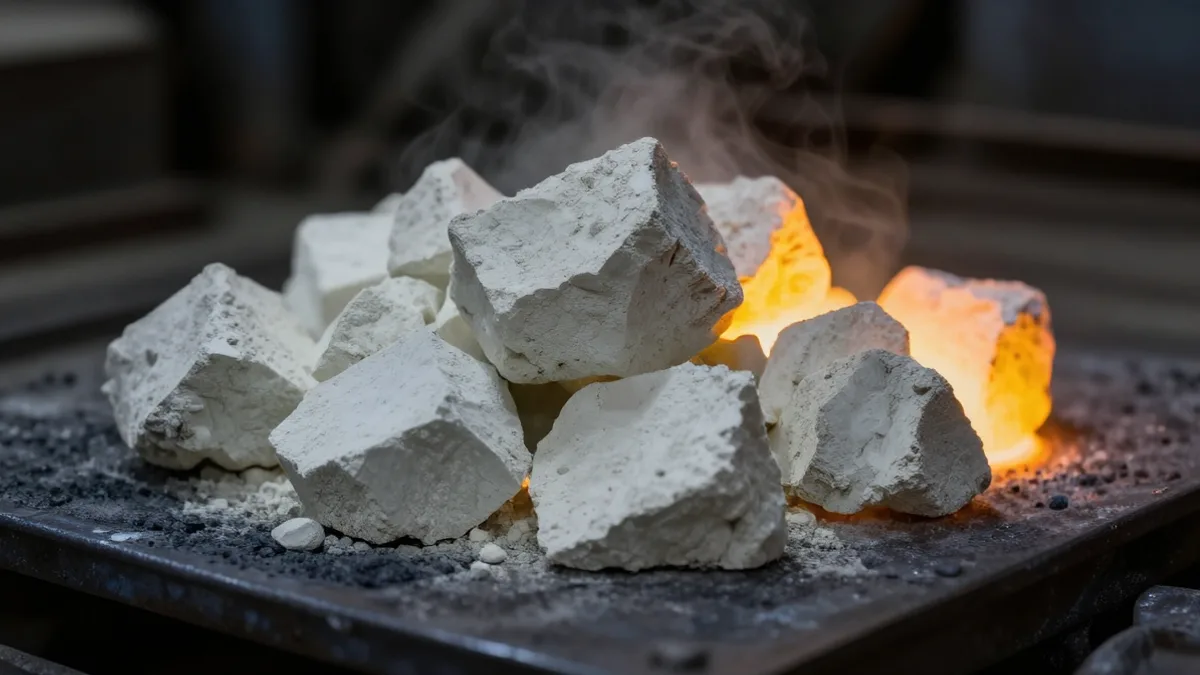
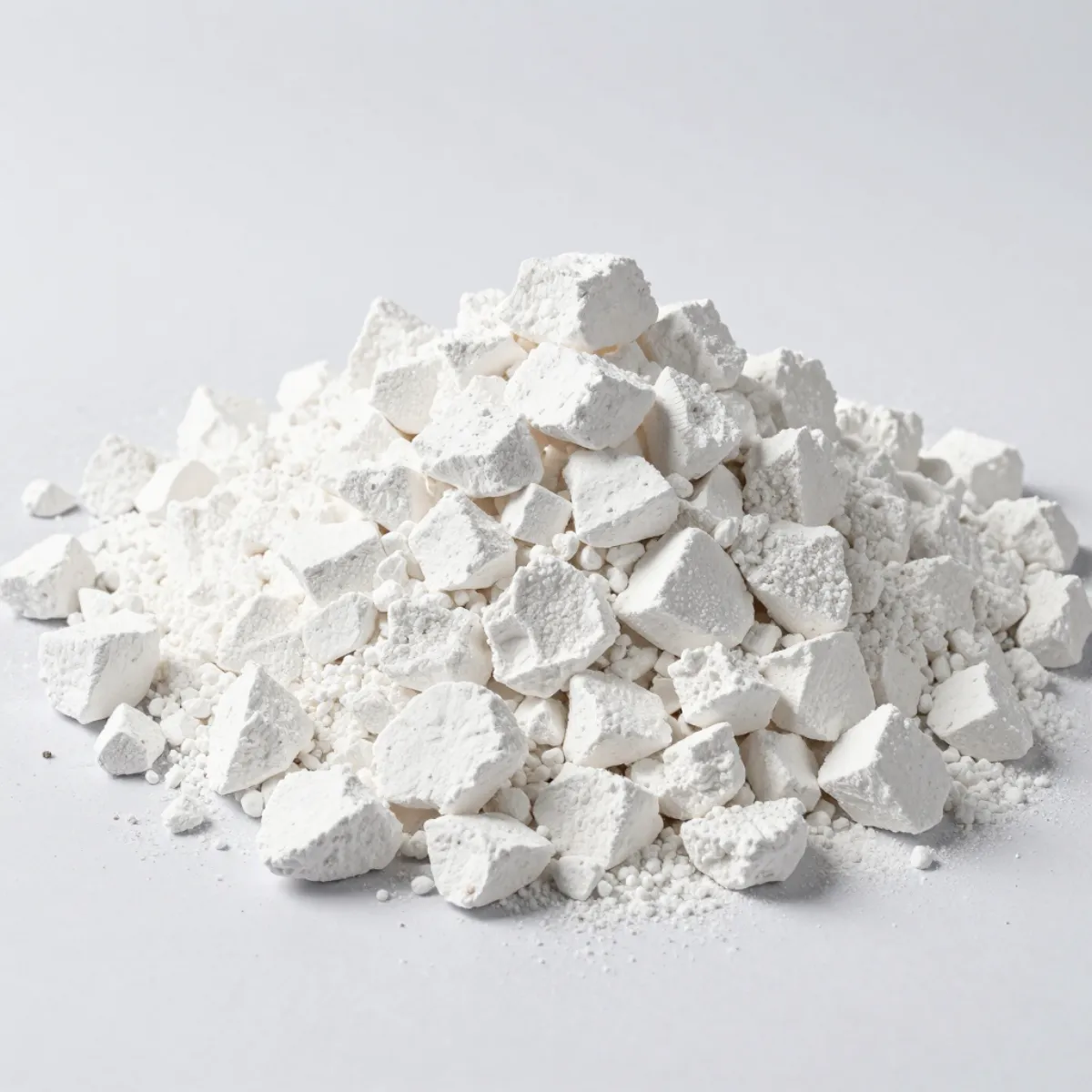
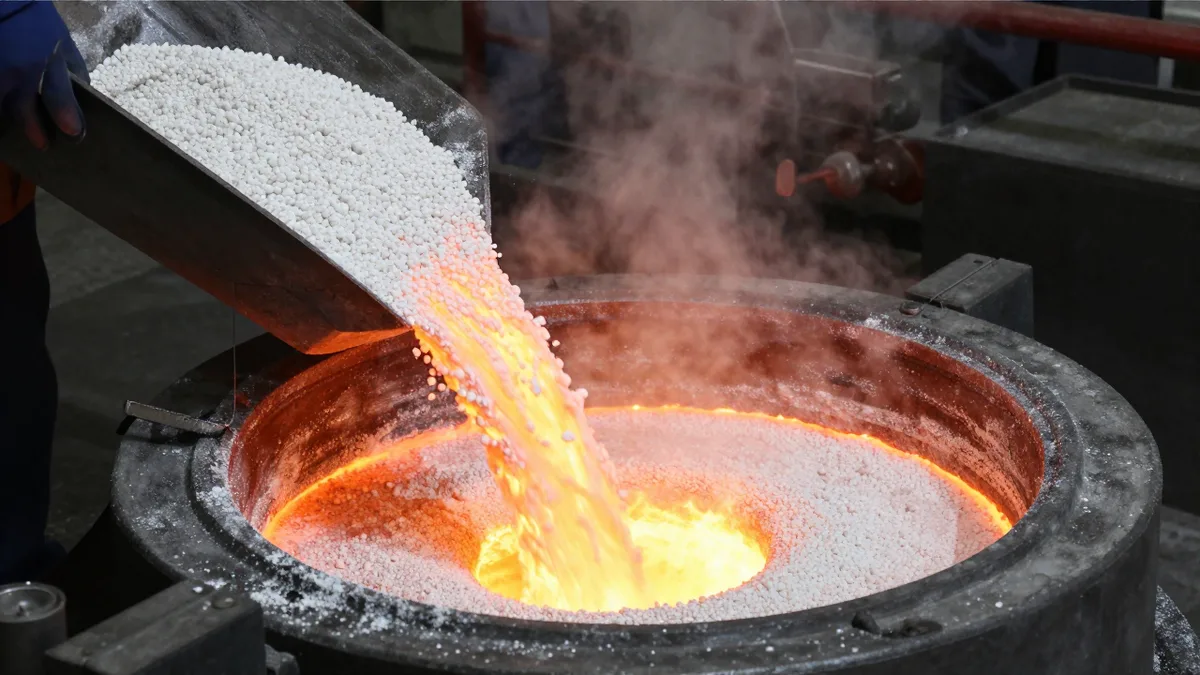
Quicklime — calcium oxide, CaO — is the basic oxide of steelmaking slag and the most widely used flux in the melt shop. It does the job of neutralizing the silica that silicon oxidation brings into the slag, building the dicalcium and tricalcium silicate backbone (2CaO·SiO₂ and 3CaO·SiO₂) that sets the slag’s melting point, viscosity, and sulfide capacity. It is what makes dephosphorization possible: phosphorus reports to the slag as calcium phosphate (3CaO·P₂O₅) only when the slag is strongly basic — CaO/SiO₂ above 3.0, 15–25% FeO in the slag during the main blow, moderate temperature — and under those conditions basic oxygen furnace steelmaking removes a typical 85–95% of the charge phosphorus. And it is the driving force of slag-phase desulfurization, where (CaO) + [S] → (CaS) + [O] runs at the slag-metal interface with sulfide capacity rising exponentially with basicity and CaO activity — under the synthetic ladle slag practice, at 2.5–3.5 basicity with FeO + MnO held below 1% and oxygen potential kept low by aluminum deoxidation, sulfur falls to the sub-0.005% level. Every flux recipe in the plant rests on one premise: that the lime charged behaves as its datasheet says. That premise does not hold automatically, because quicklime is a variable kiln product. Two limes with the same nominal CaO content can give different slag behavior from heat to heat, which is why the selection has to rest on the quality parameters — not on the grade name.
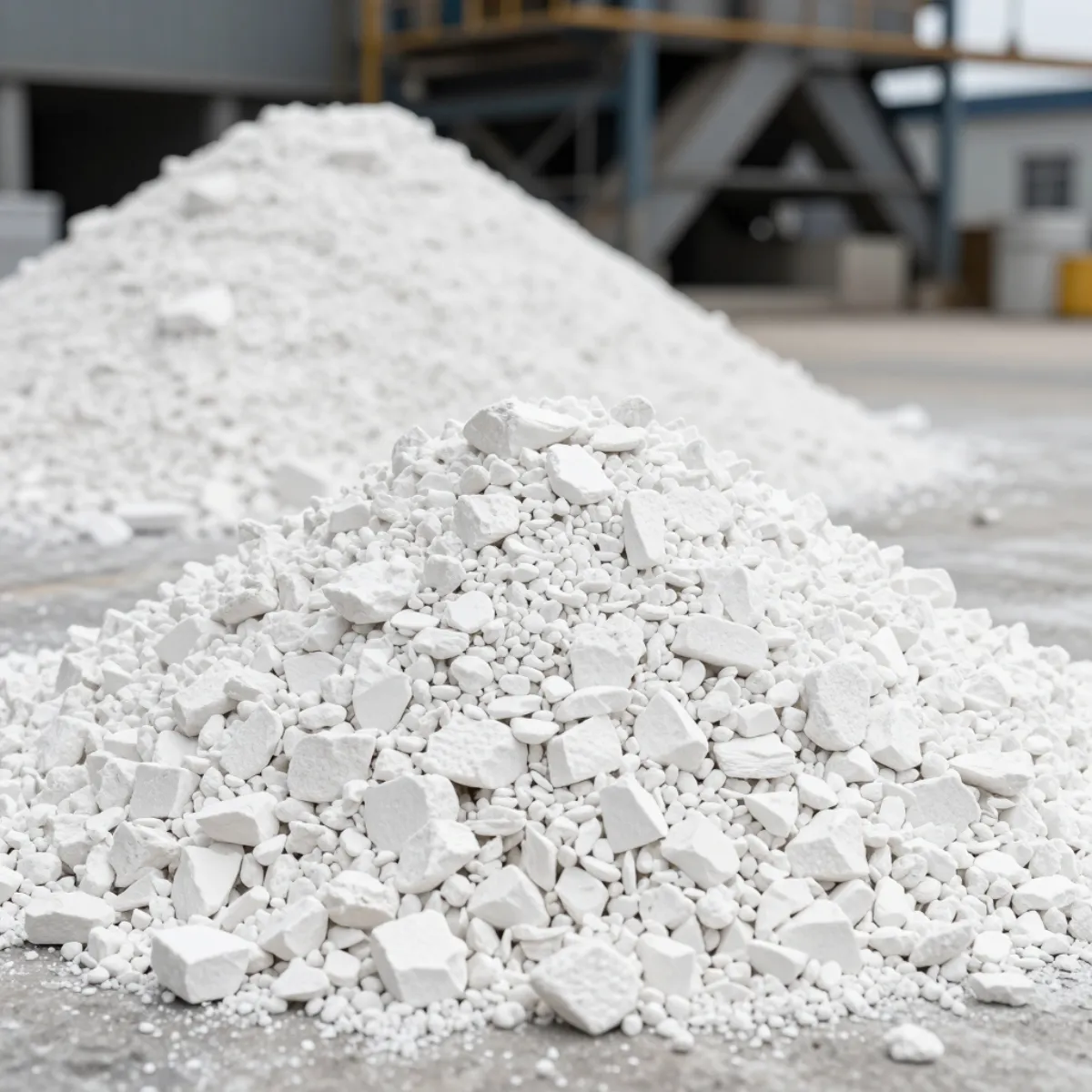
Those parameters are few, and each one has a direct metallurgical cost. Available CaO is the headline figure — 92% or better for furnace-grade material — and loss on ignition (3% or below) is its shadow: residual CaCO₃ is undecomposed limestone, and it burns endothermically in the furnace, releasing CO₂ and spending heat that should go into dissolving lime and developing the slag. Reactivity is the one most often overlooked. It is measured by the standard slaking test — the time for a standardized sample to reach a defined temperature rise when mixed with water under controlled conditions. Soft-burned, high-reactivity lime slakes in under 2 minutes; its high porosity and small CaO crystallites dissolve rapidly in the slag, and basicity develops early in the heat, which is exactly when the phosphorus and sulfur reactions want it. Hard-burned lime, above 5 minutes of slaking, dissolves sluggishly: target basicity arrives late, time to phosphorus and sulfur specification extends, and total lime consumption rises, because the undissolved fraction is lost to the slag with every heat. Sizing matters just as much. Furnace grade is 10–50 mm: fines are entrained in the off-gas, where they become dust loss and an environmental burden, oversize lumps dissolve too slowly to do their job in the heat, and a charge that segregates by particle size during handling drifts from batch to batch. The impurity profile completes the set: sulfur at 0.05% or below, because sulfur charged in the lime returns to the bath and eats the desulfurization work; and MgO held to 2.5% or below, because in the standard pairing the lime is the CaO carrier and the dolime is the MgO carrier — mixing the two roles muddies the basicity and the refractory-protection balance that the pairing is there to hold.
Then there is the problem no kiln can fix: storage. Quicklime is hygroscopic and reacts exothermically with atmospheric moisture to calcium hydroxide, Ca(OH)₂, and the hydration degrades the material in two ways at once. Chemically, reactive CaO is converted into Ca(OH)₂, which decomposes endothermically at roughly 580°C — it absorbs heat in the furnace before it releases its CaO, so the effective basicity per tonne of charge arrives late and incomplete. Physically, the hydration front crumbles the lumps into fines that cause dusting, pneumatic-conveying problems, and further effective-CaO loss. The discipline is part of raw-material quality, not a logistics afterthought: sealed, weatherproof silos or covered storage with minimal exposure to humid air, and for plants in tropical or coastal locations with high ambient humidity, just-in-time delivery with minimal on-site residence. This is why a delivery schedule and a storage practice belong on the supplier’s quality card — the same lot that arrives dry, sealed, and on time behaves as specified, while the same lot left open in a humid yard can quietly lose a fraction of its effective CaO before it is ever charged.
The last piece is the verification loop. Incoming inspection checks each shipment against the lot CoA: CaO content at 92% or better, loss on ignition at 3% or below, slaking reactivity under 2 minutes, the particle-size distribution, and sulfur at 0.05% or below. A standing supply arrangement with a qualified producer is backed by kiln process-control data and periodic quality audits, so the paper trail runs from the kiln to the furnace. And the melt shop reads its own records the way it reads refining records: rising total lime consumption, late basicity development, or heat-to-heat drift in slag chemistry localize to the lime — reactivity, sizing, hydration — before the recipe is blamed. A flat lime-consumption trend with basicity on target is the visible sign that the flux is doing its job and the MgO-saturated, refractory-protecting pairing is holding from campaign to campaign. Quicklime is the cheapest-looking input in the furnace and the most decisive one: the slag is only as repeatable as the lime behind it.