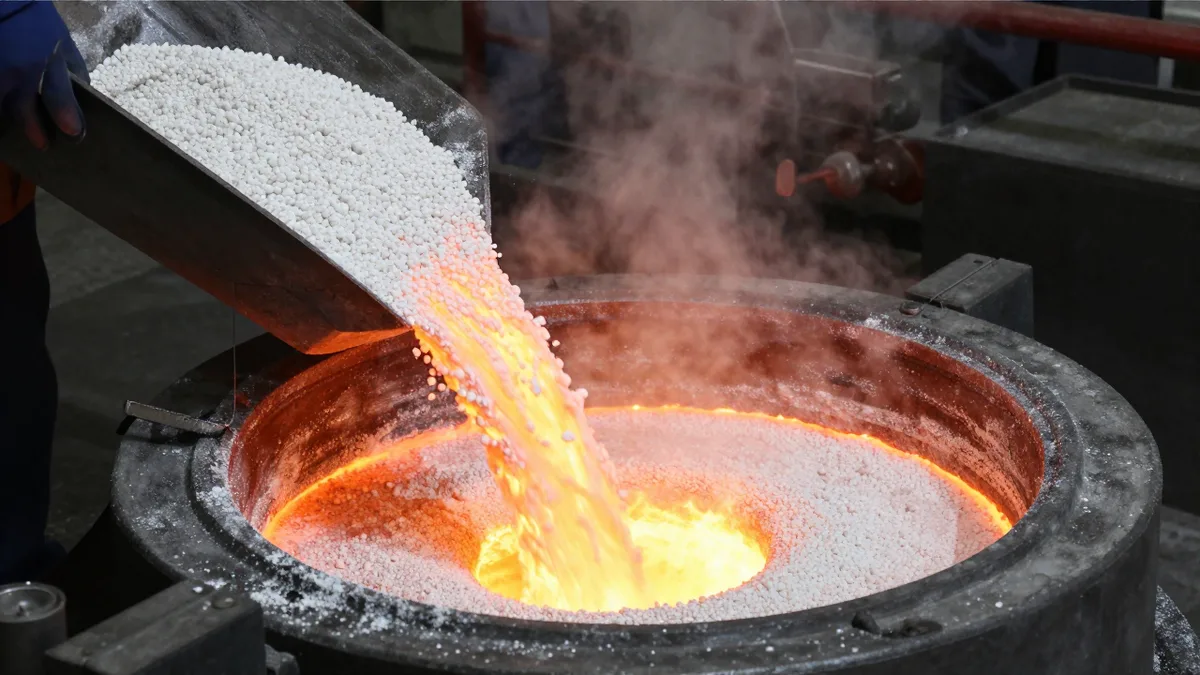
Applications
Ladle slag conditioning to raise MgO and maintain high-basicity slags that protect the ladle lining and support clean-steel refiningBOF and EAF furnace additions to build a magnesia-saturated slag that shields furnace refractories from erosionFoaming slag practice where MgO-bearing fluxes stabilize the foam layer, improving arc shielding and thermal efficiencyCombined use with fluorspar for slag fluidity adjustment and with quicklime to fine-tune the CaO-MgO basicity balance
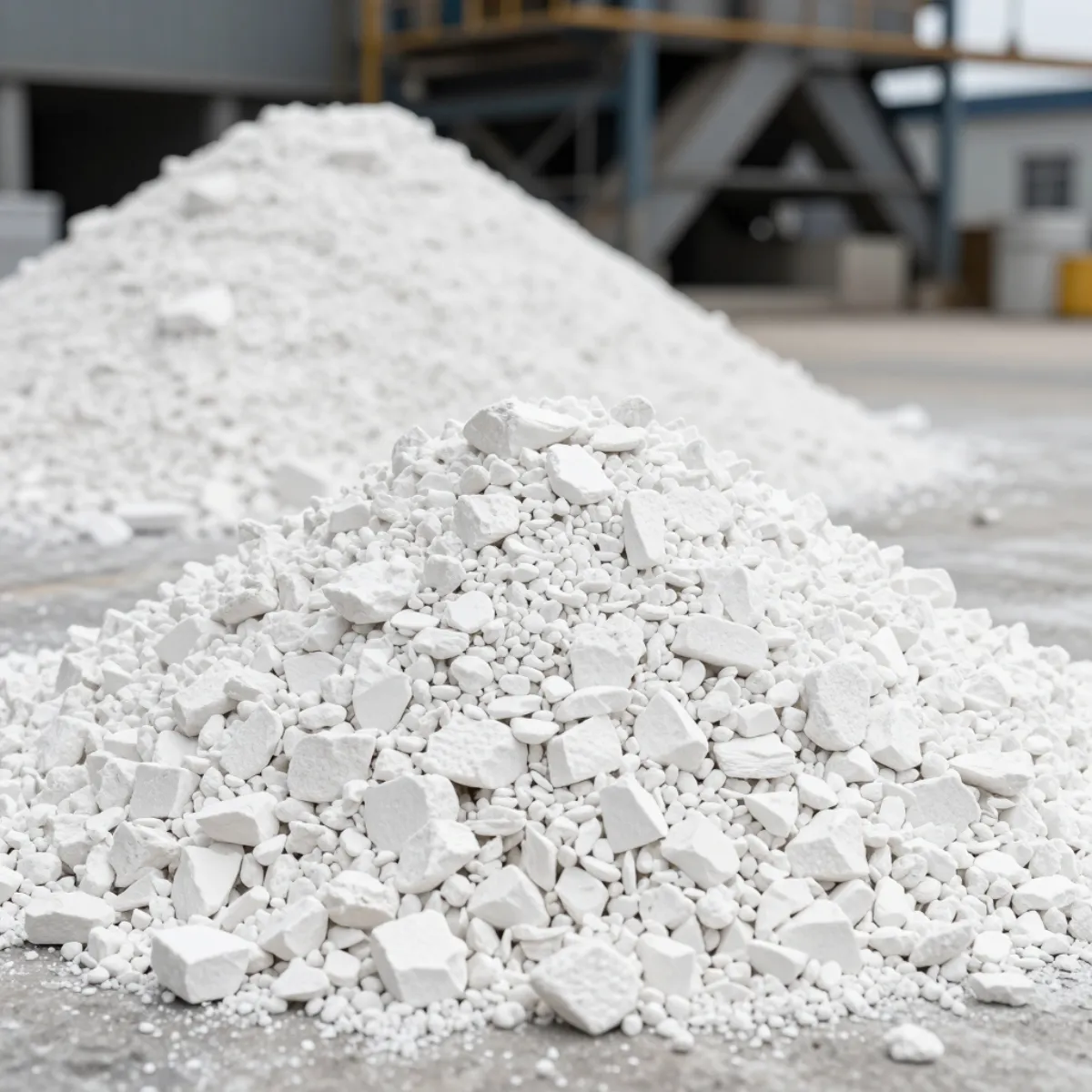
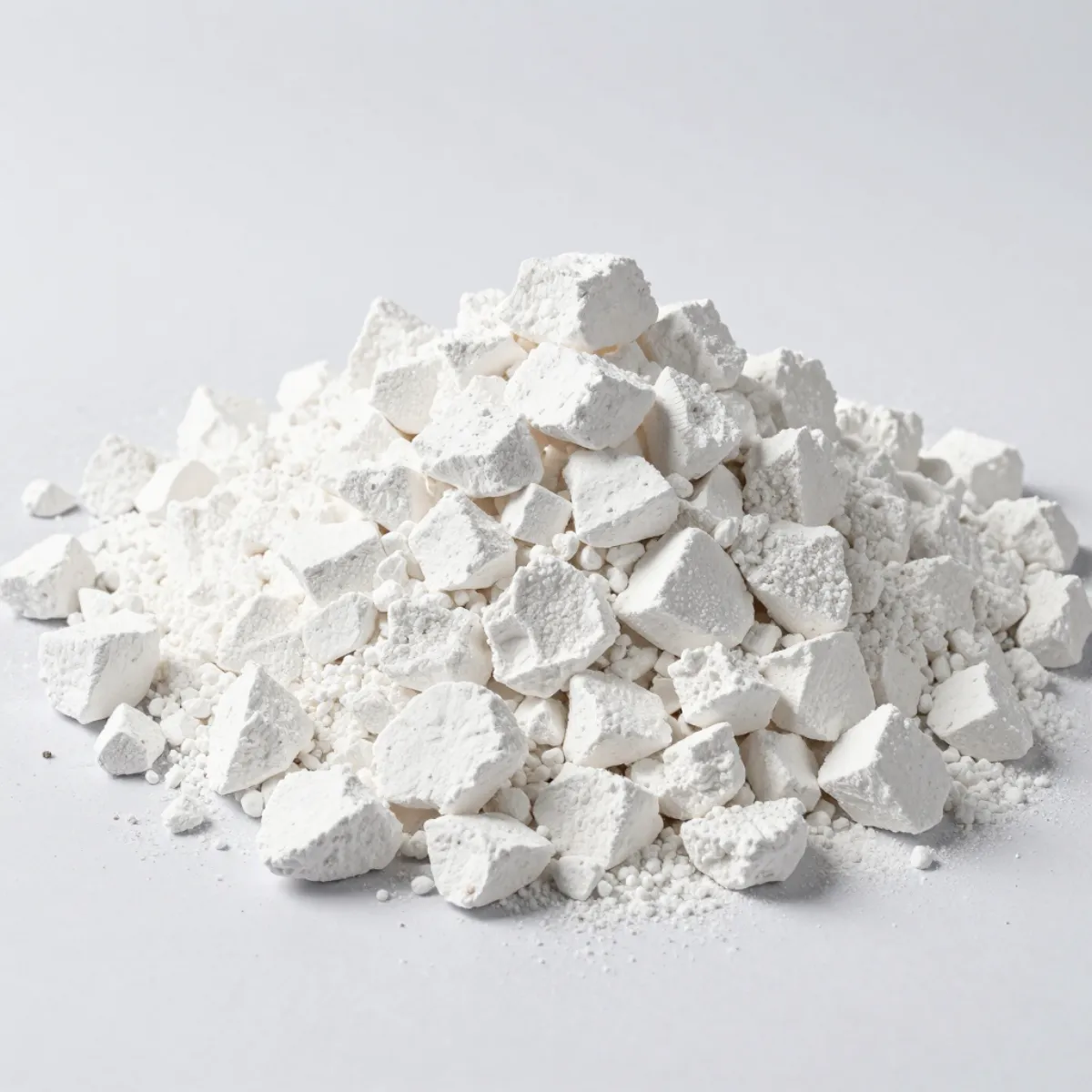
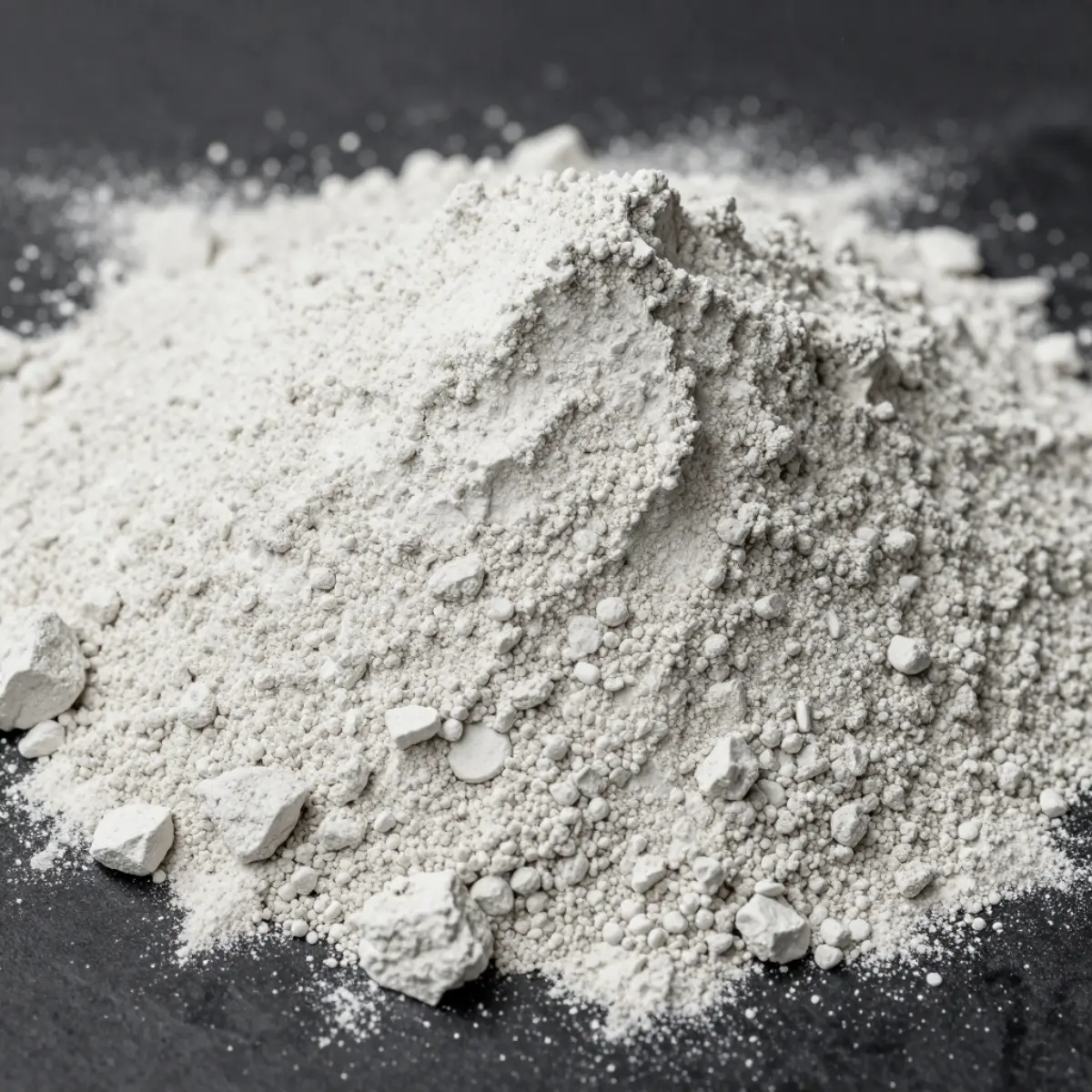
Dolomite lime, or dolime, is a burned flux produced by calcining natural dolomite — a double carbonate of calcium and magnesium — at high temperature. Dead-burned and sintered dolime combines both calcium oxide (CaO) and magnesium oxide (MgO) in a single flux, typically delivering 56% or more CaO alongside 36% or more MgO, which makes it a distinct tool from quicklime. Where quicklime supplies only CaO to the slag, dolime supplies the magnesium oxide that modern refining slags require. In steelmaking, MgO in the slag serves a dual role: it buffers slag basicity into the range that supports desulfurization and inclusion control, and it protects the magnesia-based refractories of the ladle and furnace by keeping the slag saturated in MgO. A slag that is undersaturated in MgO will aggressively dissolve magnesia from the refractory lining, eroding the working lining and shortening campaign life, so maintaining MgO saturation through dolime additions is a direct and economical route to both slag control and refractory protection.
Dolime is applied across the steelmaking route where slag chemistry must be controlled. In the basic oxygen furnace and electric arc furnace, dolime is charged with the other fluxes to build a slag that is saturated in both CaO and MgO from the start of the refining period, shielding the furnace hearth and sidewalls from attack by FeO-rich early slag. In ladle refining, dolime additions raise the MgO content of the ladle slag during secondary metallurgy, sustaining the high-basicity, low-FeO slags that maximize desulfurization capacity and protect the ladle working lining. In foaming slag practice, MgO-bearing fluxes help stabilize the foam layer that shields the arcs and retains heat, and dolime can be combined with fluorspar to adjust slag fluidity — fluorspar lowers slag viscosity and melting point, while dolime contributes the magnesia that keeps the resulting fluid slag protective rather than corrosive.
The effectiveness of dolime depends on complete calcination and controlled composition. Partially calcined material carries residual carbonate and a higher loss on ignition, which means it delivers less active CaO and MgO per ton and may liberate CO₂ in the bath. Silica is the principal diluent and flux-reducing impurity: each percentage point of SiO₂ lowers slag basicity and consumes lime, so low-silica dolime (≤2.0% SiO₂) is preferred for high-basicity slag practice. Iron oxide is kept low (≤0.5%) to avoid feeding the FeO that would depress desulfurization and drive refractory wear. Particle sizing is selected for the addition method — 5–40 mm lumps for furnace charging and ladle additions — and each shipment should be verified for MgO, CaO, SiO₂, Fe₂O₃, and loss on ignition against the certificate of analysis.
In the wider flux program, dolime is complementary rather than competing with quicklime and fluorspar. Quicklime supplies the bulk CaO needed for basicity, dolime contributes the MgO that saturation-protects refractories and stabilizes foaming slags, and fluorspar adjusts fluidity when slag viscosity limits mass transfer. Selecting the right mix of the three depends on the steel grade, the refractory type in service, and the slag practice in use. KHAKI TRADING CO., LIMITED supplies dolomite dolime within a portfolio spanning 32 product categories and serving over 80 countries, with certificates of analysis and metallurgical support available in 17 languages to help steel plants tune their slag conditioning programs.
Need pricing or technical confirmation?
Send your application, grade, size, and quantity requirements by email for a faster response.
Request a Quote