Beyond the Spot Quote: How Inventory Discipline and Specification Transparency Are Securing Ferroalloy Supply
Spot prices are what the ferroalloy buyer sees; availability is what they feel. Behind every ferrosilicon contract, every ferromanganese shipment, and every GPC recarburizer order lies the same quiet question: when the market tightens, will this lot actually ship? Allocation risk — the risk that a product exists in the market but not for you, and not on your schedule — has moved from a footnote to a standing line on the procurement agenda, and the buyers answering it are not merely paying more; they are restructuring how they hold and buy.
Why allocation risk is back on the agenda
On the supply side, ferroalloy output has never been more responsive to local conditions. Energy-cost swings, regional production controls, and furnace maintenance windows can shift available supply within a single quarter, and because much of the world’s ferroalloy is made in a handful of production regions, a constraint in one of them propagates through every trade lane that depends on it. The product does not disappear; it concentrates — and concentration is exactly what creates allocation.
On the demand side, the mix is tightening. The shift toward short-cycle electric arc furnace steelmaking pulls demand into a narrower set of high-grade carbon and deoxidation products, and the buyers running those furnaces have the least tolerance for a late lot: a recarburizer that arrives late costs more than freight, because it disrupts the charge cycle of the heats it was meant to feed. The gap between ordering a tonne and holding one in the melt shop has become a planning problem in its own right.
The inventory discipline playbook
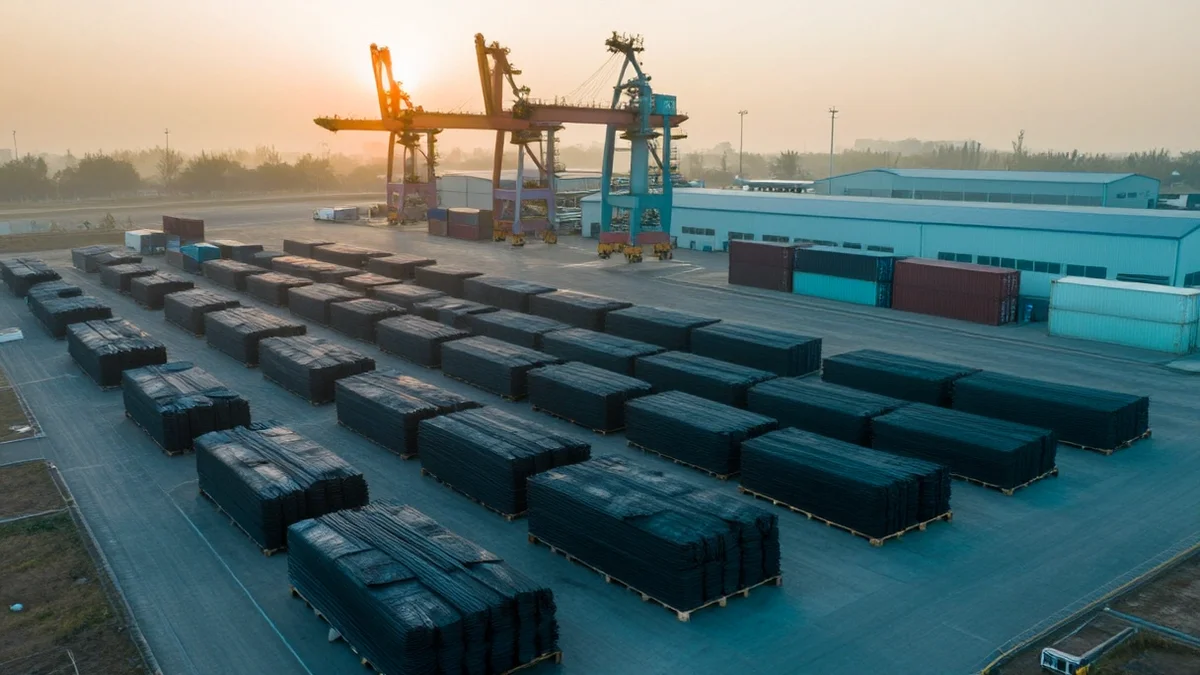
The answer is a set of practices that would look unremarkable in most industries and are spreading through alloy procurement: buffer stock held near the mill, rolling delivery schedules that replace one-off spot purchases, and written tolerances that make any conforming lot interchangeable with any other. Carrying alloy stock is not free — it ties up working capital and floor space — but the alternative is an emergency purchase made at the top of a price move, or a furnace waiting on a shipment, and the arithmetic rarely argues in favor of running flat.
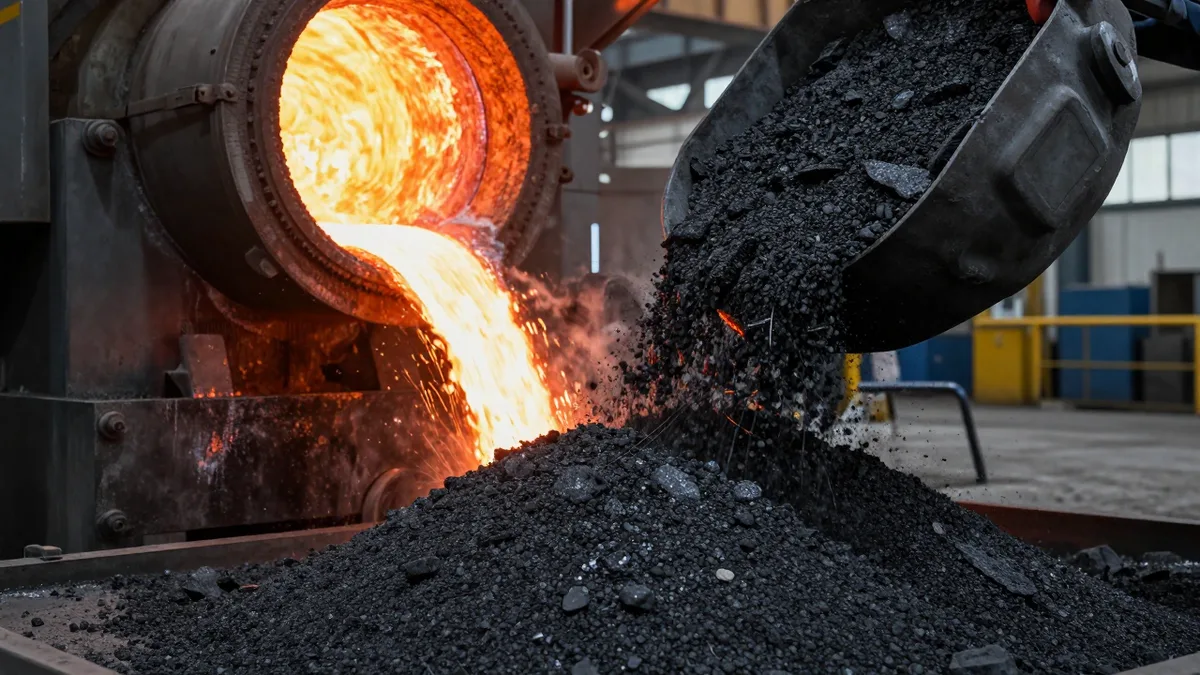
The pattern is visible in how engagements are structured. In a GPC recarburizer supply engagement for a European EAF steelmaker, the specification was fixed — carbon, sulfur, nitrogen, particle size — with a rolling delivery schedule and buffer stock positioned near the mill, plus lot-level chemistry documentation on every shipment. The result was supply continuity the melt shop could plan around: carbon uptake that behaves the same heat after heat, instead of a re-test every time the market moves.
Where specification transparency does the real work
None of it functions without the other half of the discipline: knowing that the stock is interchangeable. Buffer stock only reduces risk if a lot from one heat or one supplier can stand in for another without a fresh round of sampling and dispute — and that is a property of the specification, not of the supplier. Specification-first platforms such as steelrefiningmaterials.com, operated by KHAKI TRADING CO., LIMITED, publish standardized chemistry, grade, and packaging data for 32 product categories in 17 languages, serving buyers in more than 80 countries; when every participant works from the same written tolerances, a held stockpile becomes a liquid asset instead of a commitment to one seller.
The net effect is a change of posture. Buyers who used to react to the market — chasing the spot quote, accepting whatever allocation was left — are designing a supply system in advance: stock levels, schedules, documentation, and the specification language that makes all of it interchangeable. In a trade where volatility is permanent, that is the difference between paying a premium and holding a plan. The question the next generation of alloy buyers will be asking is no longer “what is the spot price today?” but “what is your buffer, and can I audit the specification behind it?”