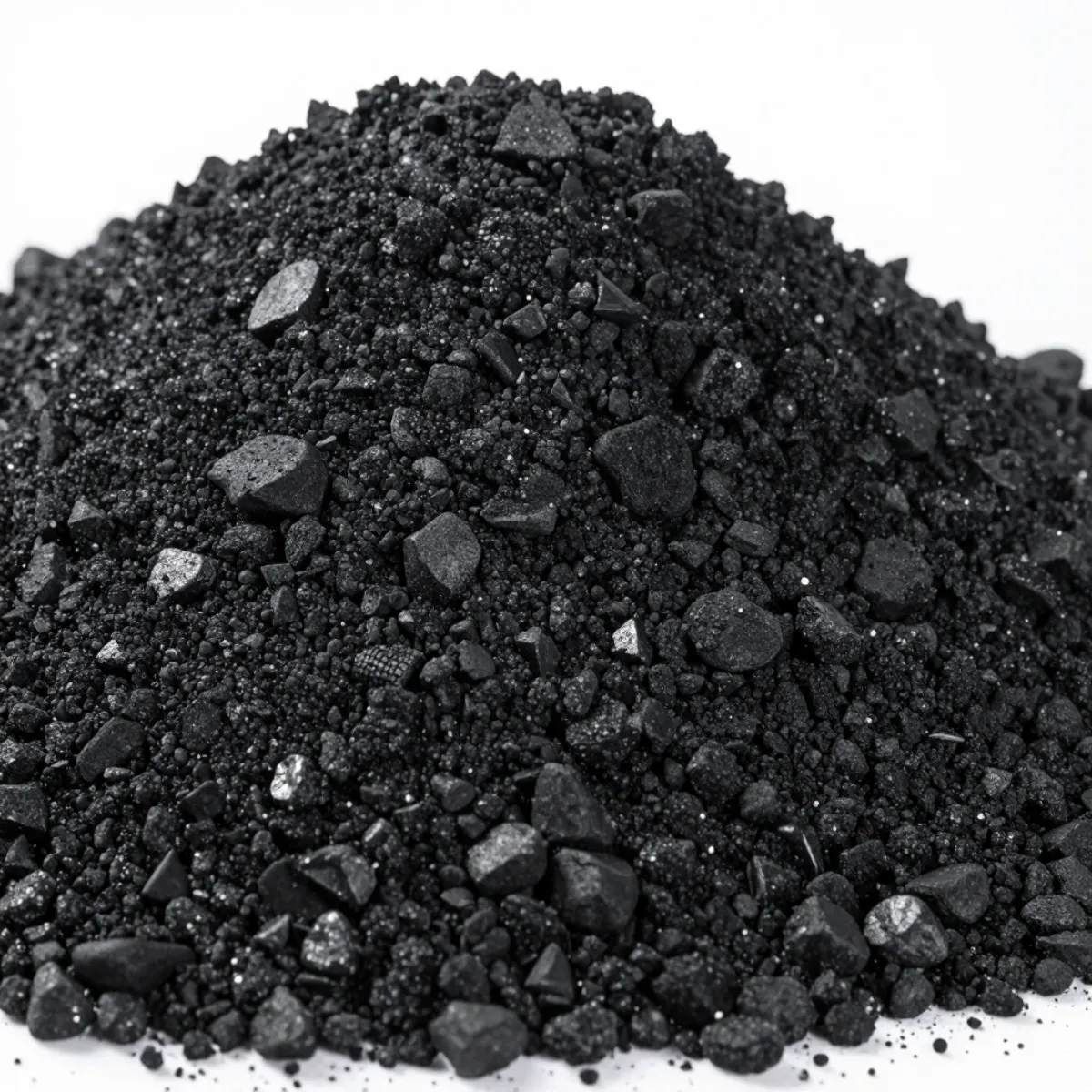
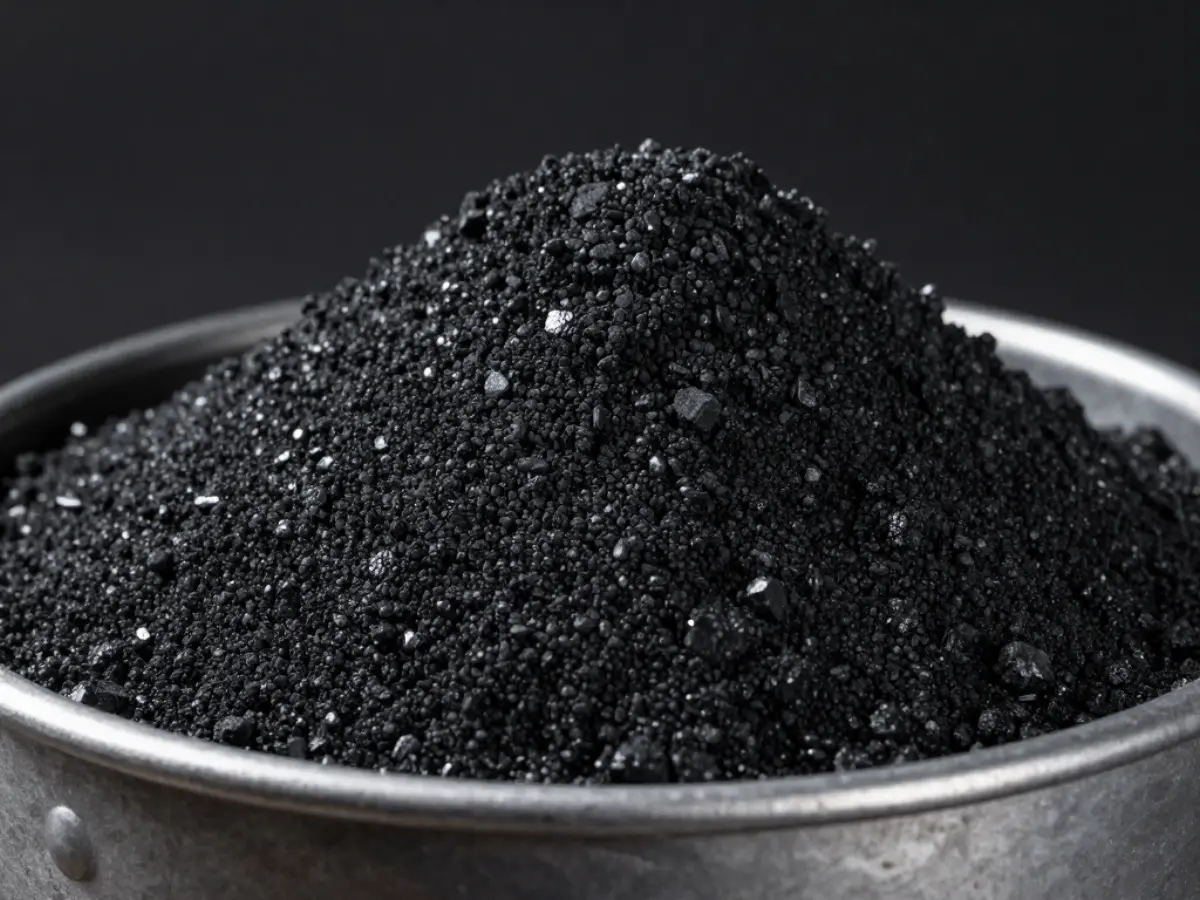
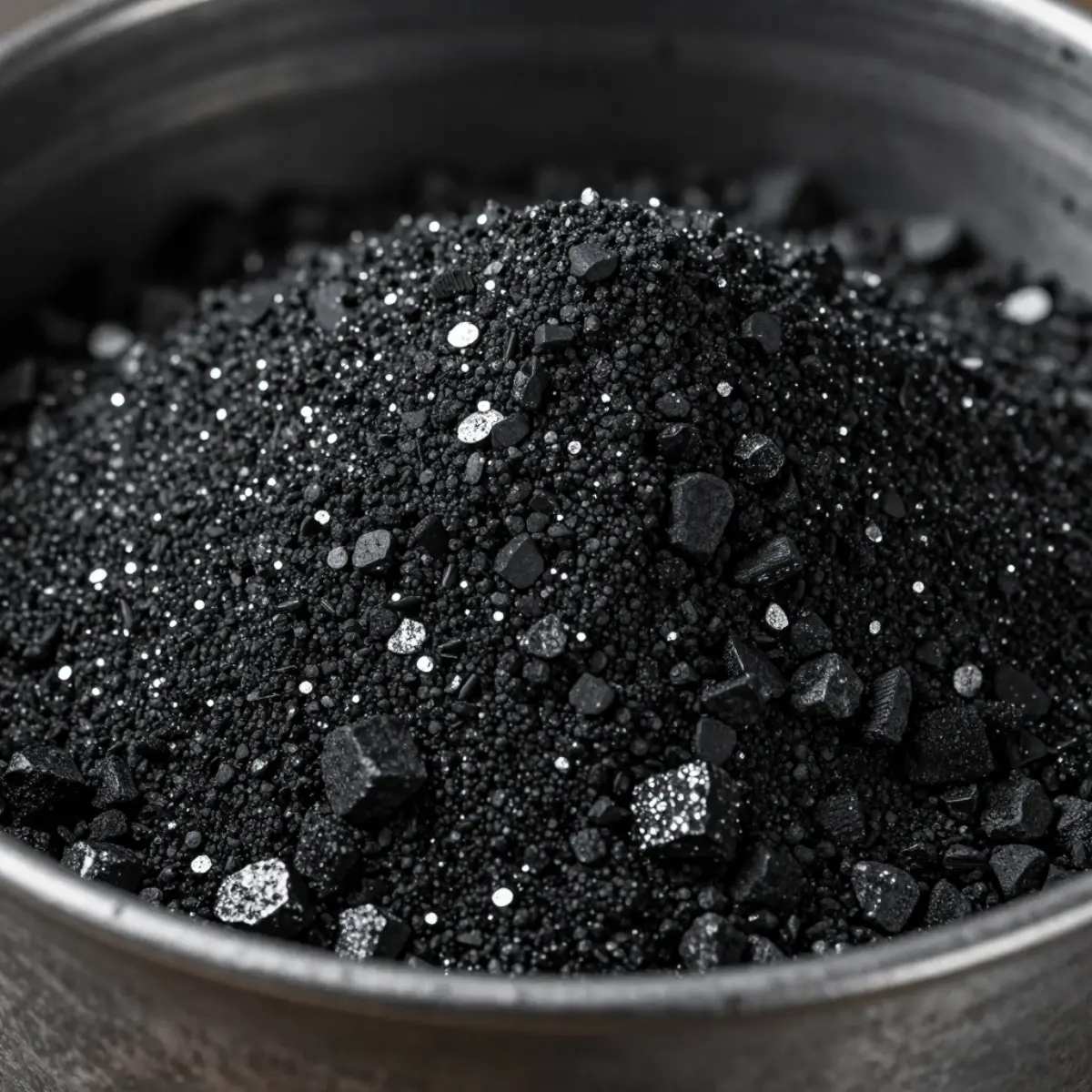
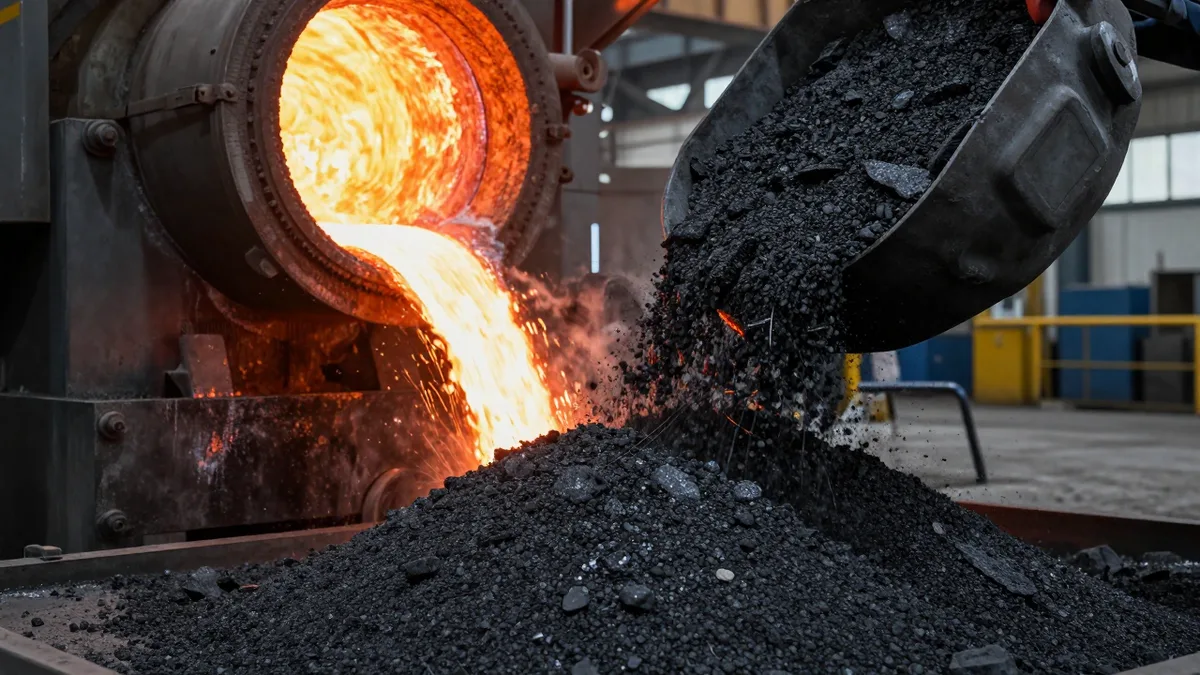
Graphitized petroleum coke (GPC) is the preferred recarburizer for modern electric steelmaking, where the EAF share of global steelmaking capacity now approaches approximately 34% and continues to grow year over year. GPC is produced by heat-treating green petroleum coke at temperatures above 2500°C, a process that removes sulfur, nitrogen, and volatile matter while converting the disordered carbon structure into crystalline graphite. The result is a low-sulfur, low-nitrogen carbon additive with fixed carbon typically above 98%, which dissolves rapidly into molten steel to restore carbon after deoxidation and oxygen blowing. When added to the steel bath, carbon from GPC dissolves as solute carbon and raises the carbon content of the melt without introducing the moisture, volatile matter, or tramp elements found in lower-grade carbon sources. As electric furnace operators push toward cleaner steel with tighter composition windows, the demand for low-sulfur and low-nitrogen metallurgical GPC rose by roughly 12.7% year-over-year in the first half of 2026, and high-grade GPC supply has remained globally tight.
The value of GPC as a recarburizer depends on four critical quality parameters: fixed carbon content, sulfur, nitrogen, and ash. Fixed carbon determines the stoichiometric carbon available for pickup — each ton of material at 98.5% fixed carbon delivers approximately 985 kg of usable carbon, subject to a dissolution recovery that typically ranges from 75% to 90% depending on addition method and bath conditions. Sulfur is the most damaging impurity in recarburizers because it reports directly to the steel bath, and for low-sulfur steel grades, sulfur introduced through carbon additions must be subsequently removed at substantial cost. Nitrogen behaves similarly: most of the nitrogen in GPC is volatilized during graphitization, leaving a product with nitrogen below 0.03%, well under the threshold that causes strain-aging and surface defects in fine-grained and cold-rolled products. Ash content, at or below 0.5%, minimizes the flux burden on the slag system and reduces the risk of oxide inclusions that impair cleanliness in demanding grades.
Particle size selection is a practical concern in recarburizer application. Material that is too fine (<0.5 mm) is entrained by the furnace off-gas system and lost before it can dissolve, reducing effective carbon yield and adding to dust handling load. Material that is too coarse (>5 mm) dissolves slowly and may sink through the bath without full utilization, particularly in ladle applications with short holding times. The 0.5–5 mm size range balances transportability — whether added in bulk to the furnace, blown through injection lances, or metered into core wire — with adequate dissolution kinetics and residence time. In EAF practice, GPC is typically charged with the scrap or injected during the meltdown phase, while ladle furnace operations add the recarburizer through the alloy hopper during stirring to correct final carbon with precision.
Procurement discipline matters because high-grade GPC is currently in tight global supply. Buyers should specify sulfur, nitrogen, fixed carbon, and ash limits on the certificate of analysis, and verify each shipment by combustion analysis for carbon and sulfur, inert-gas fusion for nitrogen, and sieve analysis for particle distribution. GPC is essentially inert and non-hygroscopic, so it can be stored outdoors or in silos with minimal degradation, though segregated storage is advised to avoid contamination from dusty or sulfur-bearing materials. KHAKI TRADING CO., LIMITED supplies low-sulfur GPC across a portfolio spanning 32 product categories and serving customers in over 80 countries, with bilingual documentation and technical support available in 17 languages to match mill procurement and metallurgical requirements.
Need pricing or technical confirmation?
Send your application, grade, size, and quantity requirements by email for a faster response.
Request a Quote