Applications
Deoxidation (killing) of molten steel in ladle furnace and vacuum degassing (VD/VOD) treatment stationsGrain refinement and inclusion morphology control in aluminum-killed steel grades for deep drawing applicationsAlloying addition in the production of aluminum-bearing steel grades such as weathering steel (Corten) and electrical steelFinal deoxidation in continuous casting tundishes to prevent subsurface blowholes and pinhole defects
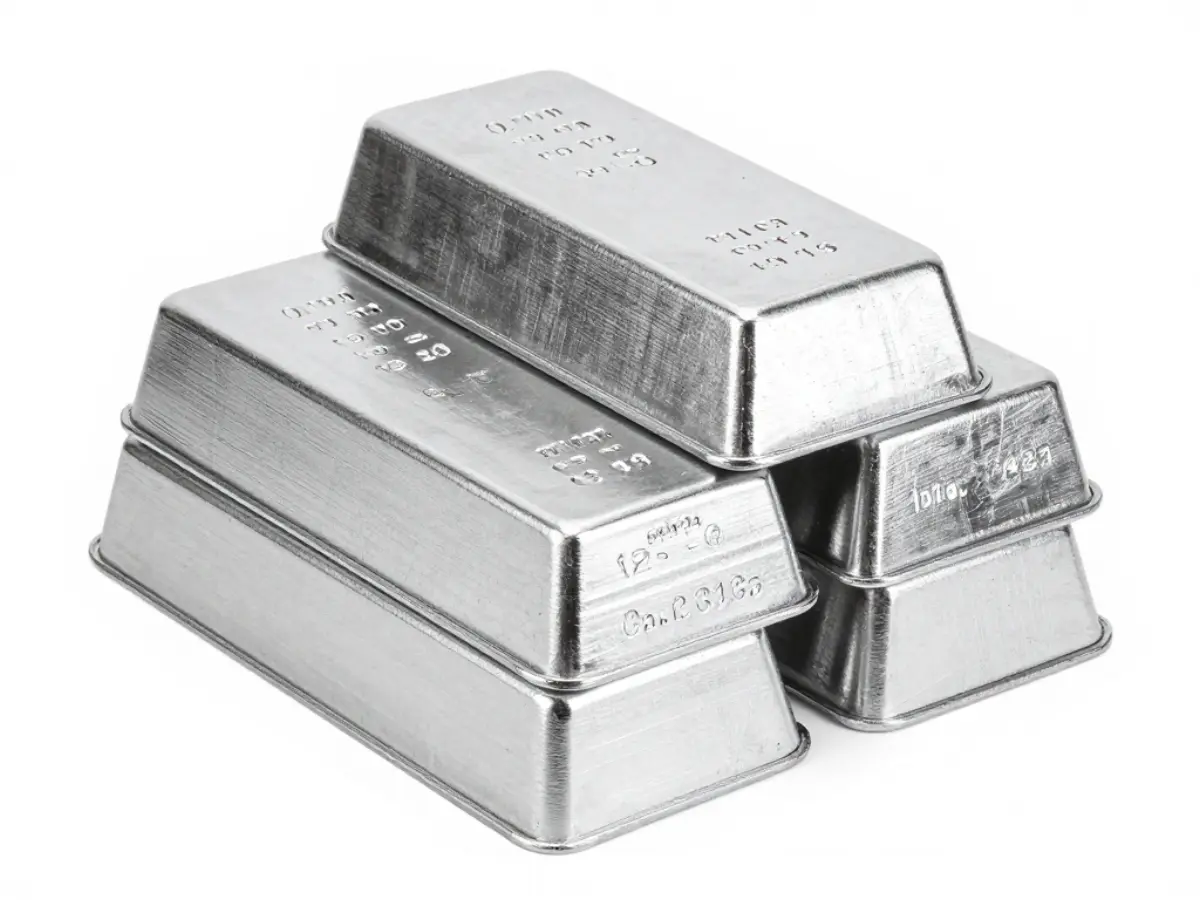
Aluminum ingots are the backbone of steel deoxidation practice, particularly in the production of ultra-low-carbon and interstitial-free (IF) steel grades where stringent oxygen control is paramount. With a minimum aluminum content of 99.7%, our ingots deliver the chemical reactivity needed to reduce dissolved oxygen in molten steel to levels below 10 ppm, forming stable alumina (Al2O3) inclusions that can be effectively removed through slag-metal reactions and gas stirring. The resulting aluminum-killed steel exhibits superior surface quality, making it suitable for exposed automotive panels and tinplate applications.
The effectiveness of aluminum as a deoxidizer stems from its high affinity for oxygen and the thermodynamic stability of the alumina reaction product. In typical ladle furnace practice, aluminum additions are calculated based on the dissolved oxygen content measured by electrochemical sensors (celox/celox probes), with the target soluble aluminum content ranging from 0.02% to 0.06% depending on the steel grade. Our ingots’ consistent composition eliminates the variability that plagues secondary aluminum sources, enabling tighter control of the Al/O ratio and reducing the incidence of clogged submerged entry nozzles (SEN) during continuous casting.
Beyond deoxidation, aluminum ingots serve as critical alloying additions in specialty steel production. In weathering steel (ASTM A588), aluminum contents of 0.15–0.25% promote the formation of a protective rust layer that significantly extends service life in atmospheric exposure conditions. For grain-oriented electrical steel used in transformer cores, precise aluminum control at the 0.02–0.03% level works in conjunction with silicon and manganese to optimize the secondary recrystallization texture during annealing. Each shipment is accompanied by a certificate of analysis documenting the full chemical composition, ensuring traceability and compliance with customer specifications.
Need pricing or technical confirmation?
Send your application, grade, size, and quantity requirements by email for a faster response.
Request a Quote