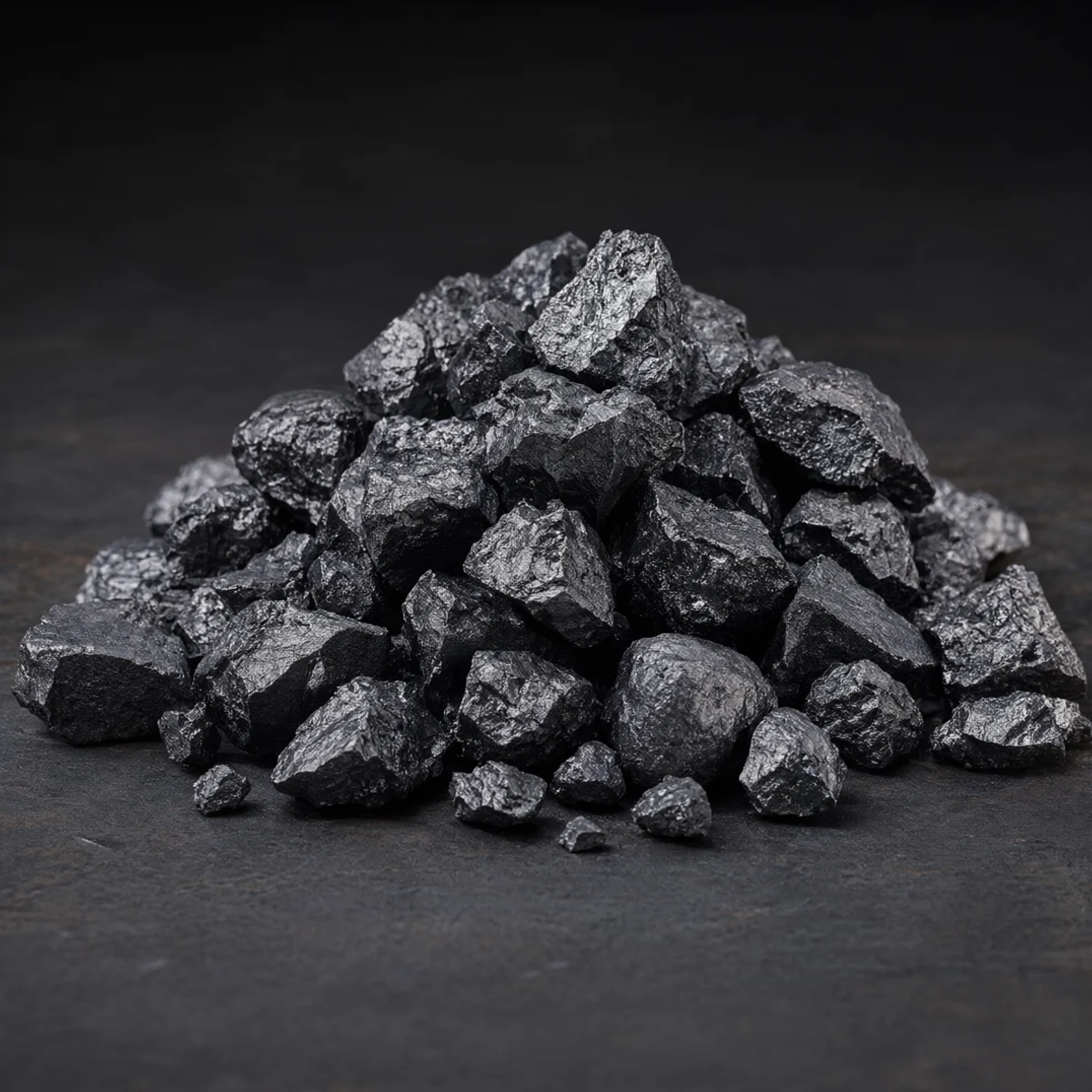
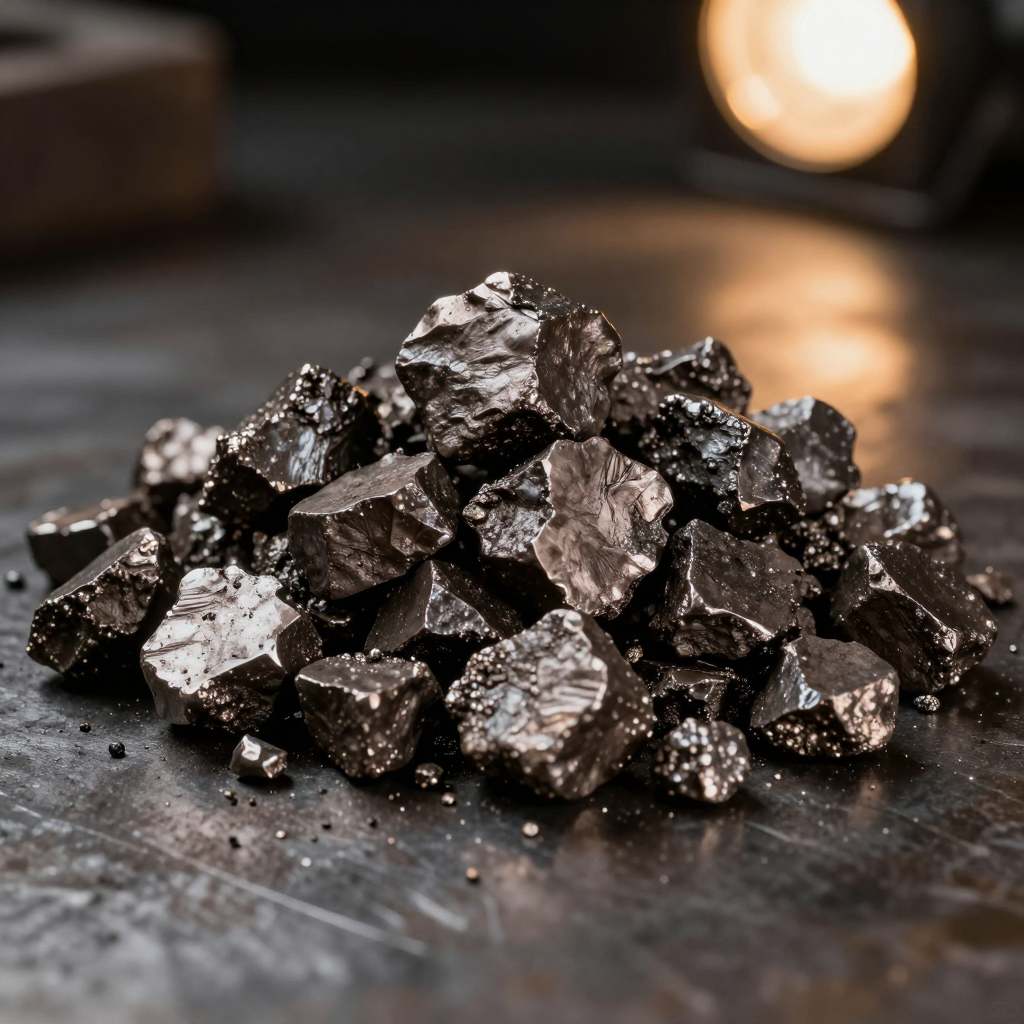
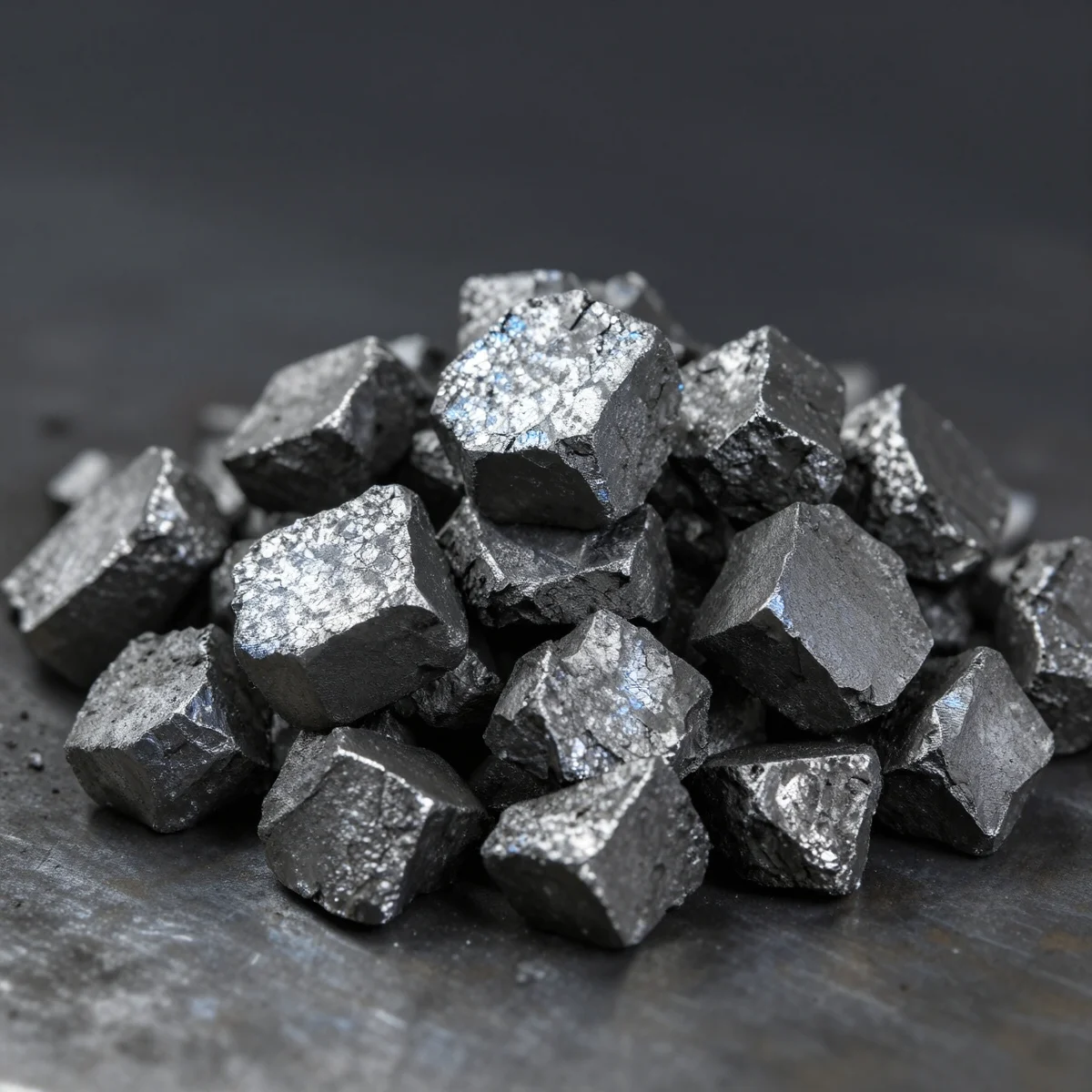
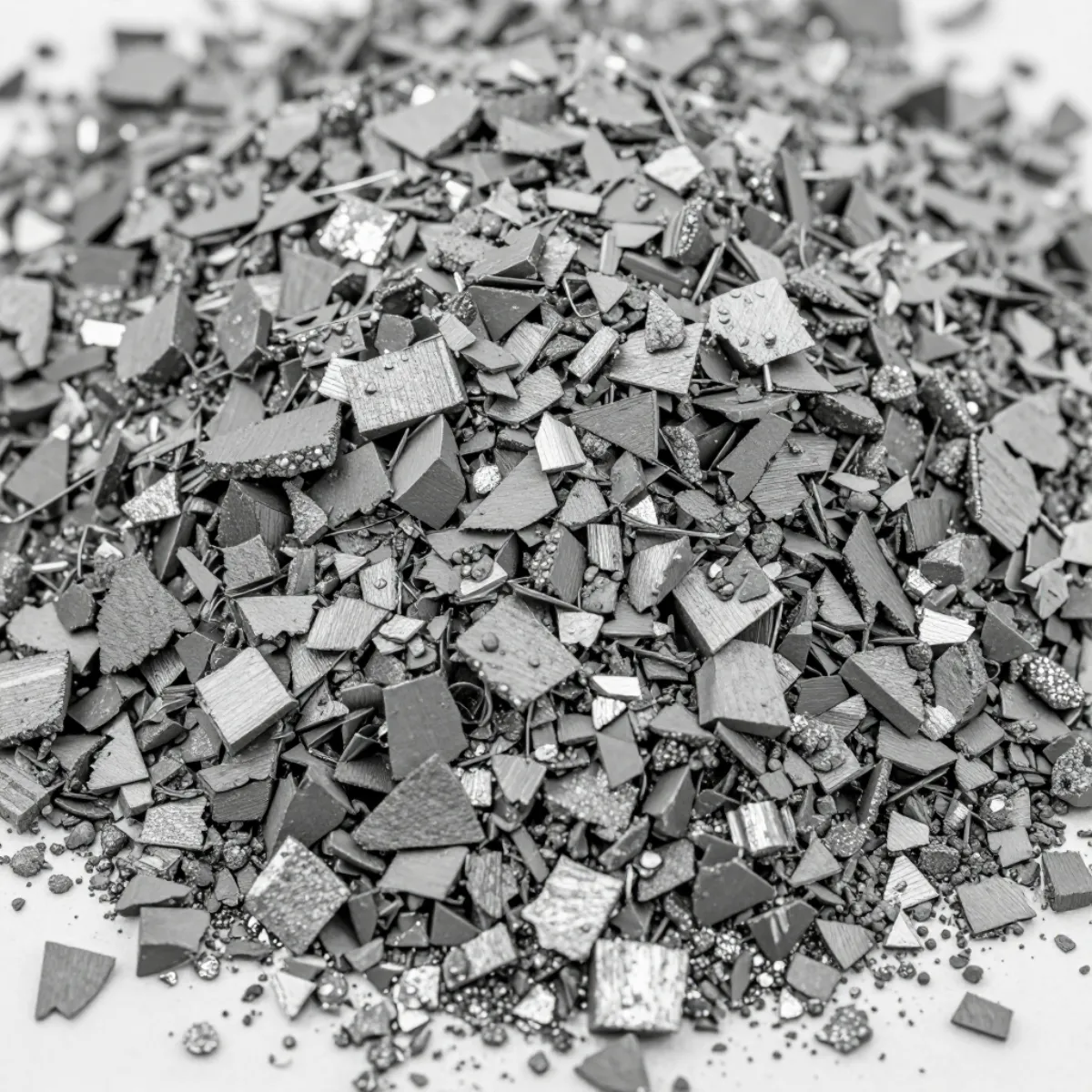
Ferromanganese is the second most consumed ferroalloy in steelmaking after ferrosilicon, and its grades are separated not by manganese but by carbon: high-carbon FeMn (HC FeMn) carries 6–7% carbon with 65–80% manganese, medium-carbon FeMn (MC FeMn) carries 1–1.5% carbon with 75–85% manganese, and low-carbon ferromanganese carries 0.5% carbon or less with 80–90% manganese. All three are produced by the carbothermic reduction of manganese ore in an electric furnace; the lower-carbon grades require additional refining steps to strip out the carbon, which is why the price rises as the carbon falls — high-carbon FeMn is typically 30–40% less expensive per unit of manganese than low-carbon FeMn. LC FeMn is the lowest-carbon ferromanganese grade and the one specified where the heat’s carbon budget is tight enough that even the 1–1.5% carbon of the medium-carbon grade would push it over: interstitial-free (IF) steel, electrical steel, and the stainless and ultra-low-carbon automotive grades where carbon must be minimized. It is the last ferromanganese rung before a different material altogether — electrolytic manganese metal — takes over.
The reason the carbon in the alloy matters is that it adds directly to the carbon in the steel. In ultra-low-carbon programs the final carbon is targeted in hundredths of a percent, so the carbon of the last manganese addition is a first-order term in the chemistry, not a rounding factor. That is why the practice splits the addition: bulk manganese goes in as high-carbon or medium-carbon FeMn in the furnace or at tapping, where the extra carbon is harmless or even wanted, and the final manganese correction in the ladle furnace uses LC FeMn, so the last addition cannot push the heat over its carbon limit. Where even the 0.5% carbon of LC FeMn is too much — the tightest electrical and clean-steel grades — mills switch to electrolytic manganese metal, at least 99.7% manganese with carbon below 0.04%, which carries no meaningful carbon at all. LC FeMn sits in the band between those two: it costs less per unit of manganese than manganese metal and still respects the carbon budget, which is what makes it the standard choice for IF and deep-drawing programs. Recovery in that final-trim role is the best in the route — 95–100% in ladle-furnace practice, versus 90–98% in EAF and 85–95% in BOF — because the controlled stirring and slag conditions of the ladle keep the manganese from re-oxidizing.
Manganese does its two jobs in these heats exactly as it does in every heat. As a deoxidizer it forms manganese oxide (MnO), whose melting point is below that of silica or alumina, so it fluxes with the other deoxidation products into liquid inclusions that float out of the bath; as a sulfide former it fixes sulfur as manganese sulfide (MnS) instead of brittle iron sulfide (FeS), preventing hot shortness at the rolling mill. In solid solution it strengthens the steel by roughly 5–6 MPa of yield strength per 0.1% added and improves hardenability. What changes at the low-carbon end is the envelope the alloy itself must stay inside: phosphorus cannot be removed in steelmaking and accumulates in recycled steel, so the high-quality ceiling of 0.15% — against 0.30% for standard material — is what keeps a clean-steel program clean, and sulfur at or below 0.03% keeps the desulfurization burden low. Sizing follows the addition point, 10–50 mm lumps for ladle-furnace trim and foundry work and 0–10 mm fines for metering and blending, and because the addition is small and late, the cost of a bad lot shows up immediately in the final analysis.
The verification discipline is tighter than for a bulk addition, because there is no second chance at the end of the sequence. Every lot is checked against its certificate of analysis: manganese and carbon against the grade band — the HC/MC/LC distinction is process-critical and must be documented with precision throughout the supply chain — phosphorus and sulfur against the tramp-element ceilings, and the size distribution against the purchase order. Composition consistency from lot to lot, a delivery schedule matched to consumption (mills on these programs typically run just-in-time windows of two to four weeks), statistical process control of chemistry and sizing, and a documented quality system supported by periodic audits are what make the final trim predictable; most mills consuming manganese at scale also keep a second qualified source, for both price leverage and supply resilience. KHAKI TRADING CO., LIMITED supplies low-carbon ferromanganese within a portfolio of 32 product categories serving over 80 countries, with certificates of analysis and technical support available in 17 languages to match mill procurement and metallurgical requirements.
Need pricing or technical confirmation?
Send your application, grade, size, and quantity requirements by email for a faster response.
Request a Quote