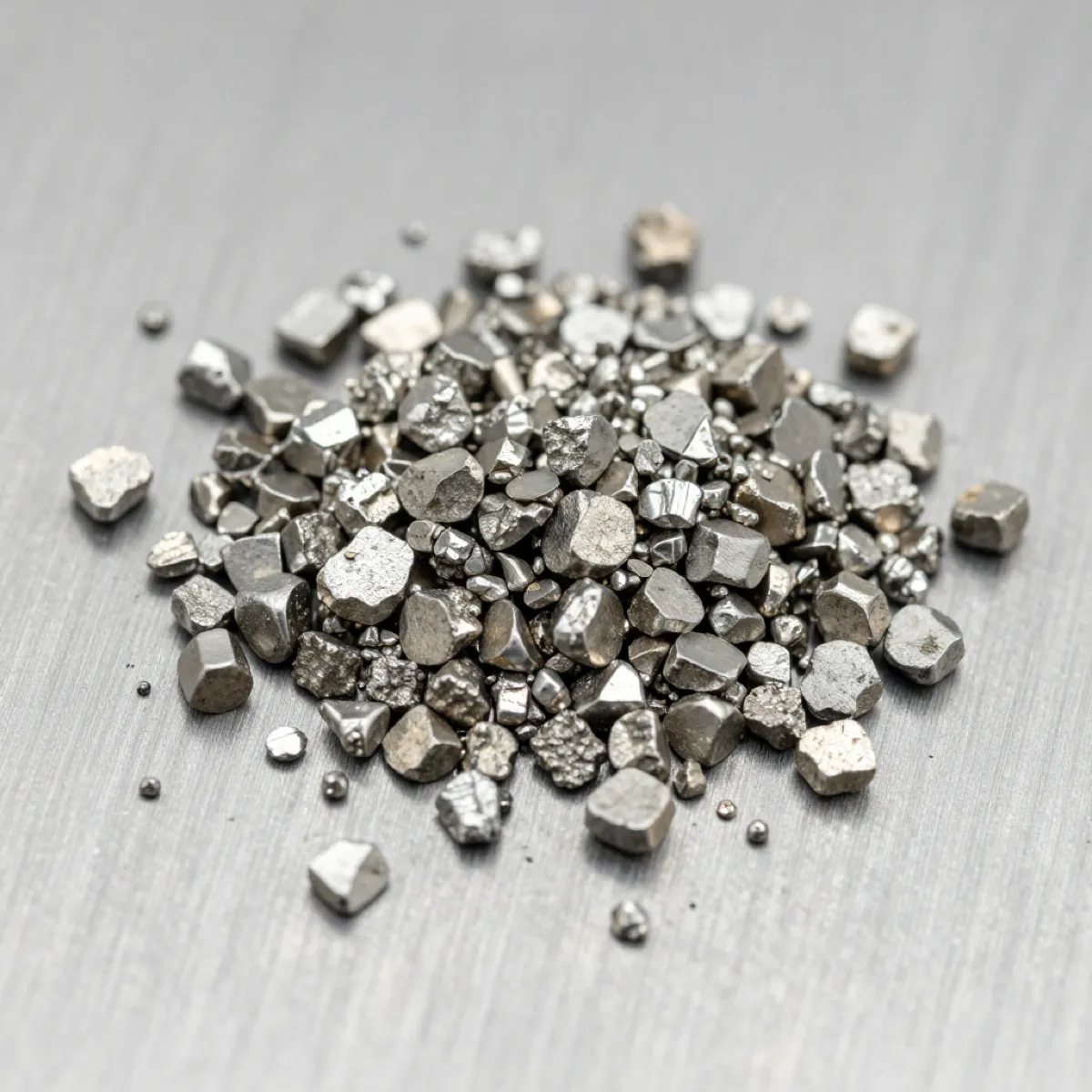
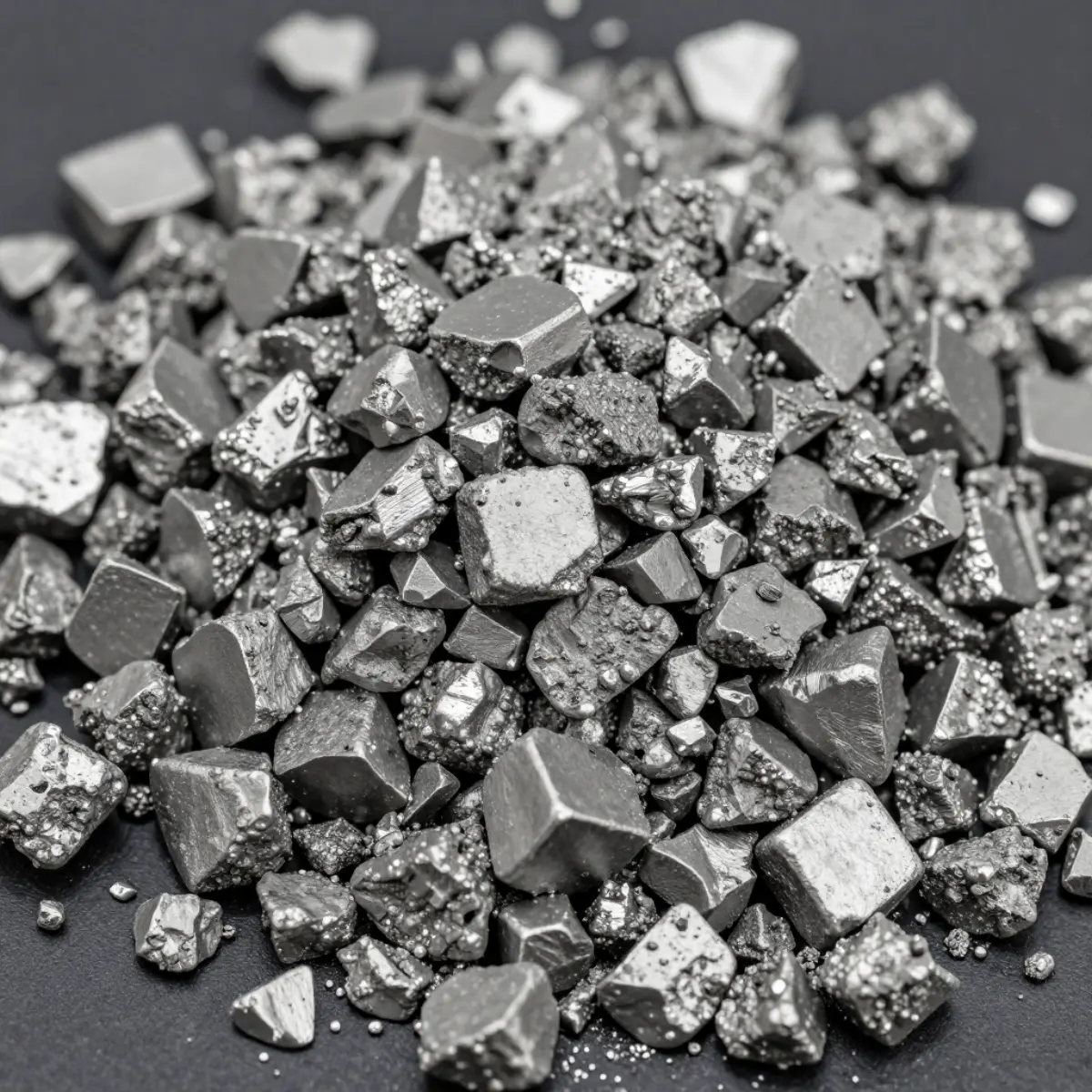
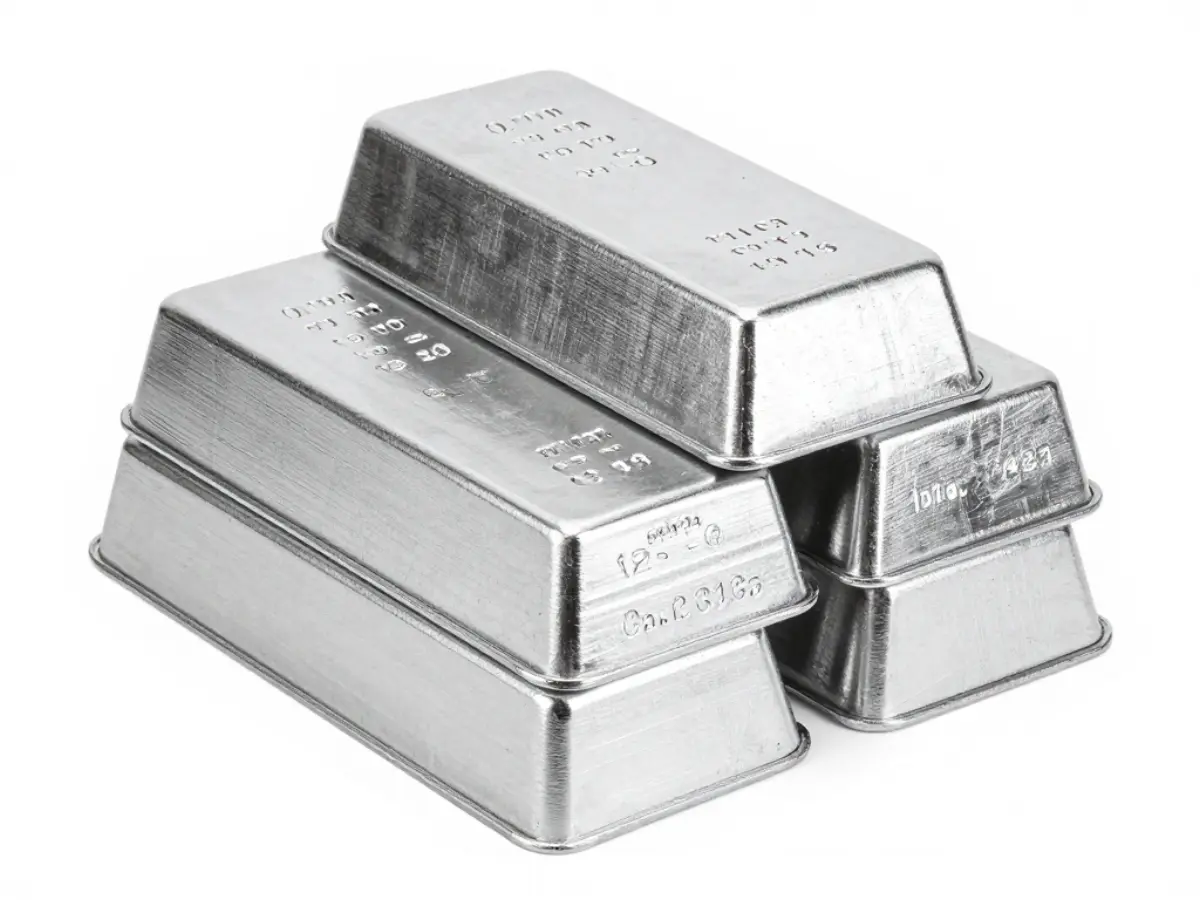
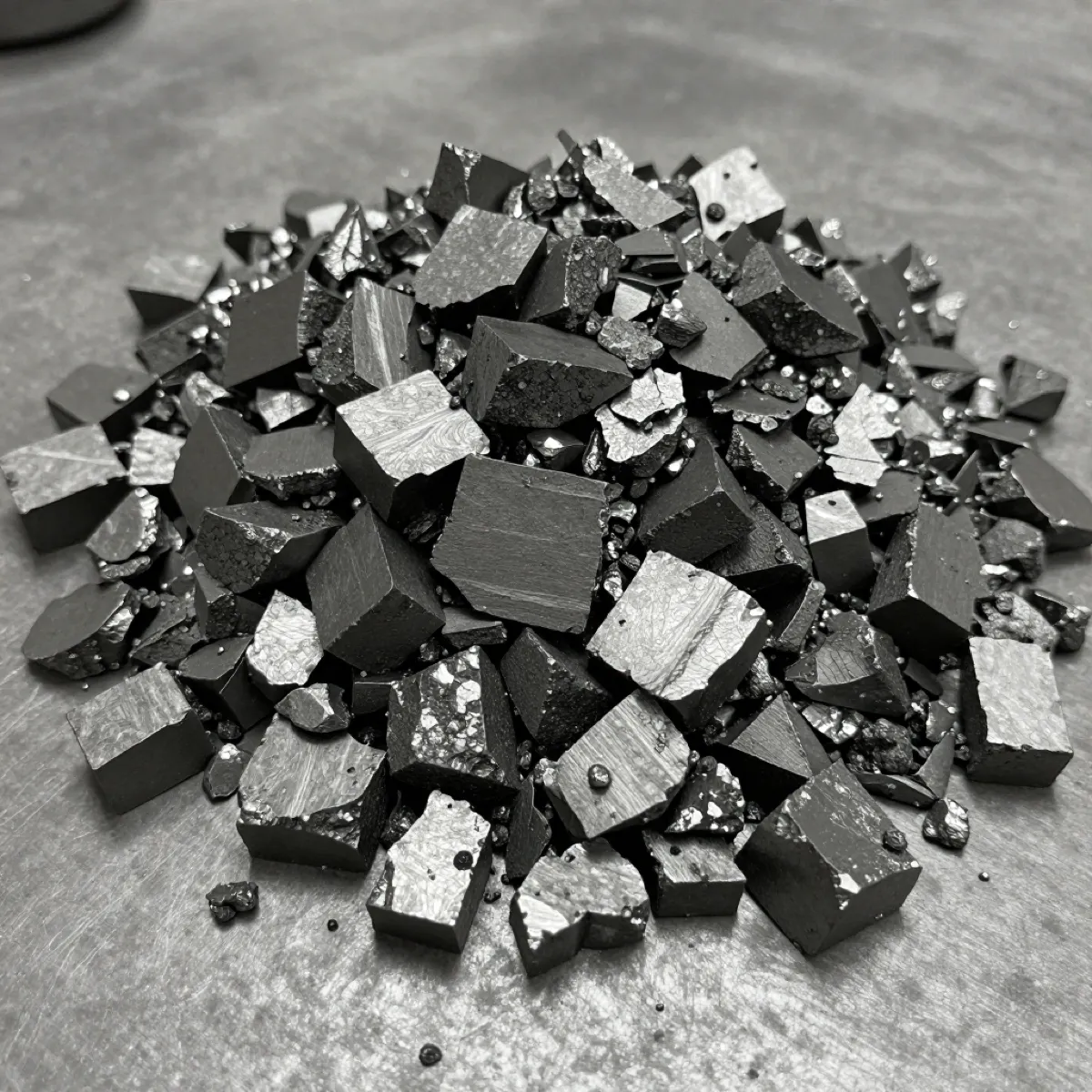
Ferrotitanium (FeTi) is a versatile iron-titanium alloy used at the end of the steelmaking cycle for three distinct metallurgical functions: final deoxidation, grain refinement, and nitrogen fixation. Produced by aluminothermic or silicothermic reduction of titanium-bearing raw materials (ilmenite, titanium scrap, rutile) with iron, ferrotitanium is supplied primarily in a 20–35% titanium grade for routine steelmill use, with a Ti-rich 65–75% grade available for specialized applications. Although added in small quantities — typically a few kilograms per heat — ferrotitanium has an outsized influence on as-cast structure, cleanliness, and the mechanical toughness of the finished steel, making it one of the most cost-effective microalloying additions available to the melt shop.
Titanium’s deoxidation power is among the highest of the common steelmaking elements. Added to the ladle after primary deoxidation with ferrosilicon or aluminum, titanium scavenges the residual dissolved oxygen that those additions did not capture, fixing it as stable titanium oxides that are retained in the slag or as finely dispersed inclusions harmless to product quality. This final oxygen sweep matters most in clean-steel grades — bearing, pipeline, and HSLA steels — where dissolved oxygen drives inclusion formation and degrades fatigue life and toughness. By bringing residual oxygen to a very low baseline, ferrotitanium closes the cleanliness gap that primary deoxidation alone cannot.
The second function, grain refinement, is what makes ferrotitanium indispensable for high-toughness steels. The small amount of titanium that dissolves in the steel precipitates during solidification and cooling as fine TiC and TiN particles, which pin the austenite grain boundaries and restrict grain growth through the hot-rolling and welding cycles. A finer final grain size translates directly into higher toughness — measured as a lower ductile-to-brittle transition temperature — which is why titanium microalloying is a mainstay of line-pipe steel (API 5L X60–X80), high-strength structural steel, and automotive grades that must absorb impact in service. Coarse, columnar as-cast structures and centerline segregation in continuous casting are similarly reduced because the TiN particles act as heterogeneous nucleation sites for a fine equiaxed solidification front.
Titanium’s third function is nitrogen fixation. Free nitrogen dissolved in steel is a damaging element: it causes strain aging and dislocation locking in cold-formed products and reduces toughness. Titanium has a very high affinity for nitrogen and ties it up as TiN, removing it from solution and neutralizing its embrittlement effect. This is especially valuable in steels made from high-nitrogen scrap or through electric-arc furnaces, where nitrogen pickup is hard to avoid. The same TiN particles that fix nitrogen also serve as the grain-refining precipitates described above — one addition, two benefits.
In practice, the metallurgical value of ferrotitanium depends on controlling titanium yield — the fraction of the added titanium that dissolves in the steel rather than being lost to oxidation or slag. Yield is sensitive to the oxygen and slag chemistry at the moment of addition and to the physical form and sizing of the FeTi itself. Our ferrotitanium is supplied in controlled lump gradings (5–50 mm) with certified titanium content and consistent sizing, so that the melt shop can dose to a target dissolved-titanium residual rather than over-add to protect a yield assumption. Over-addition is avoided deliberately: excessive titanium forms stringer inclusions and can clog continuous-casting submerged-entry nozzles, creating surface defects and casting breaks. Precise dosing — supported by a well-sized, consistent FeTi — captures the toughness and cleanliness benefits without the downside risk.
For procurement and melt-shop planning, ferrotitanium sourcing converges on three parameters: certified titanium content with low carbon and tramp residuals; consistent lump sizing that protects yield predictability; and supply reliability, since the alloy is used in small but metallurgically critical quantities where a stockout can force downgrading of a high-value heat. Establishing a long-term supply relationship for ferrotitanium, alongside ferromolybdenum and the ferroalloy platform more broadly, is one of the most effective ways to stabilize titanium yield heat-to-heat and to meet the demanding toughness specifications of modern line-pipe, structural, and automotive steel programs.
Need pricing or technical confirmation?
Send your application, grade, size, and quantity requirements by email for a faster response.
Request a Quote